
The return of the Paris–Berlin night train: what is European Sleeper really worth?
The Paris–Berlin night train is back with European Sleeper.
The Paris–Berlin night train had disappeared almost as quickly as it had returned. In December 2025, the ÖBB ended the Nightjet, once again leaving this major European route without an overnight alternative.
Six months later, against all expectations, a young Dutch company decided to take up the challenge: European Sleeper. The rolling stock is old, but it has made it possible to quickly restore service on a route that had disappeared.
I boarded on March 31, 2026, on only the third departure, to answer a simple question: what is this night train between Paris and Berlin really worth today?

To guide you through the article, it is structured as follows:
- The story of my trip from Paris to Berlin in “Comfort Plus” single
- The different ways to travel on board European Sleeper
- European Sleeper: an original business model
- My verdict on the Paris–Berlin trip
- Practical tips for your trip with European Sleeper
With over 35 years of experience in transportation, including several years in night trains and the airline sector, I analyze current trains with both a technical and customer-centric perspective.
The story of my trip from Paris to Berlin in “Comfort Plus” single
Thanks to European Sleeper, the Paris–Berlin service departs once again from Gare du Nord, where night trains to northern Germany used to leave. I’m especially fond of its magnificent building—more so than Gare de l’Est, where the Nightjet used to depart.
Another pleasant surprise awaited me: for some time now, major works have been underway to pedestrianize the forecourt and make the area in front of Gare du Nord more welcoming. Arriving via Boulevard de Denain, I almost feel like I’m in the countryside!

Gare du Nord platform 18: Paris–Berlin, finally back!
I can’t hide my delight when, twenty minutes before the scheduled departure at 6:03 PM, the Paris–Berlin night train appears on the boards—platform 18. We’d been waiting so long for its return!
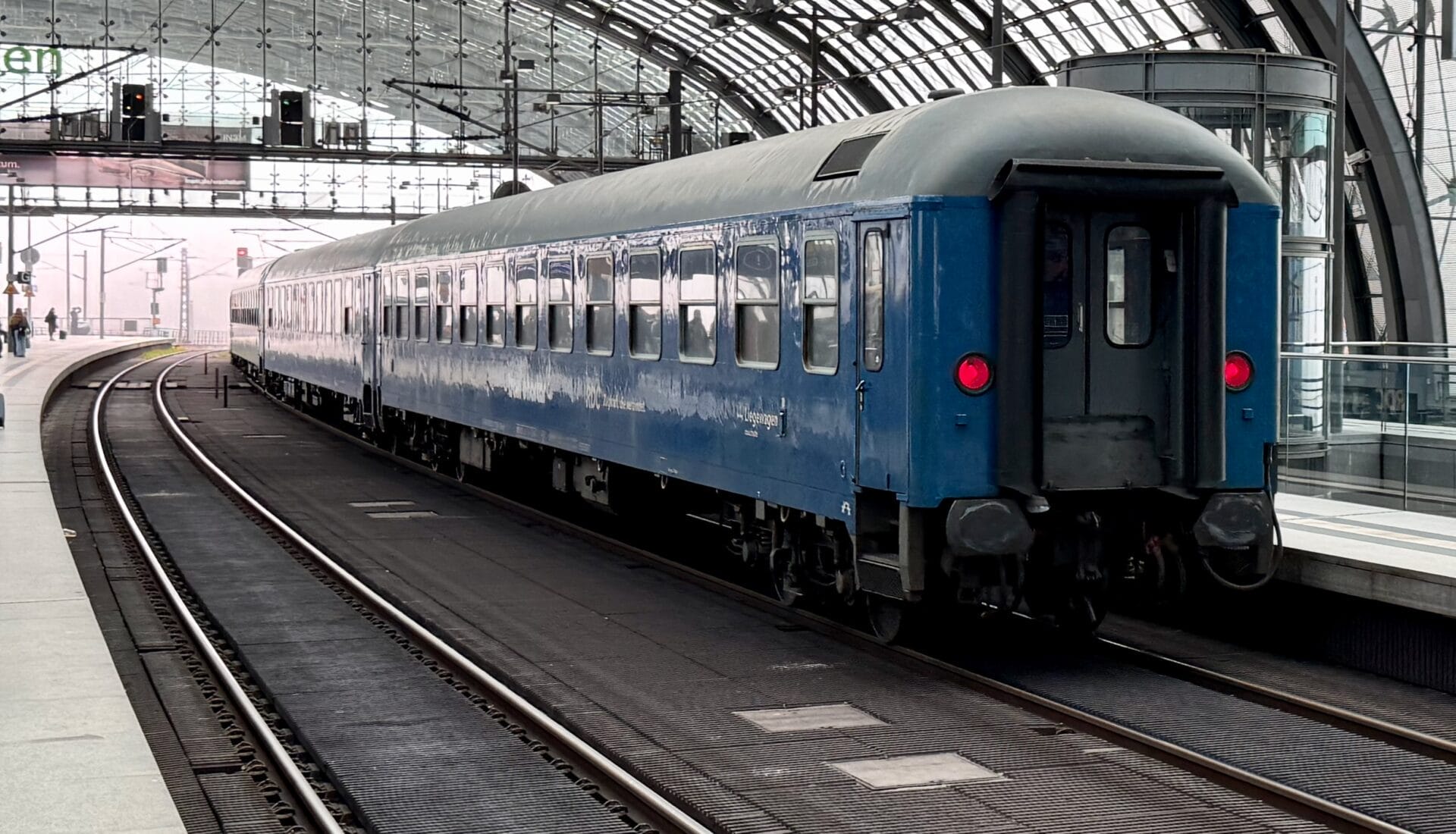
This train consists of seven couchette cars and two sleeper cars. With its midnight-blue livery, it has a vintage feel.

I discover my “Comfort Plus” cabin in the sleeper car—and it’s spacious!
I’m traveling in a sleeper car in “Comfort Plus” class, European Sleeper’s top tier. It was built in the 1990s for the German railways, back when DB ran a vast network of night trains—the famous City Night Line. Despite its age, the materials are of high quality and have held up rather well over time.
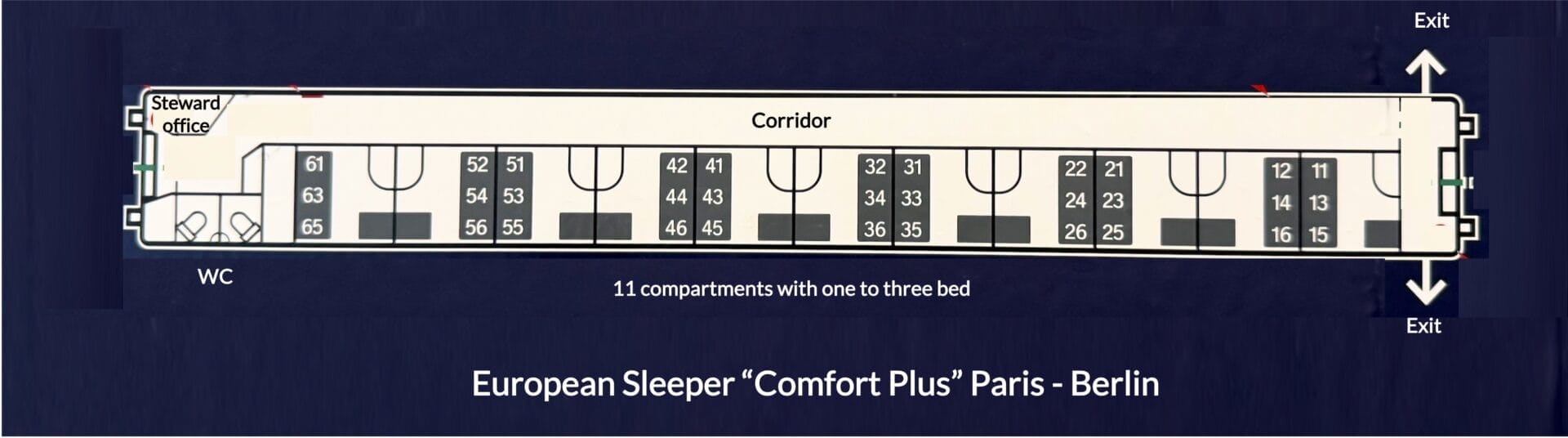
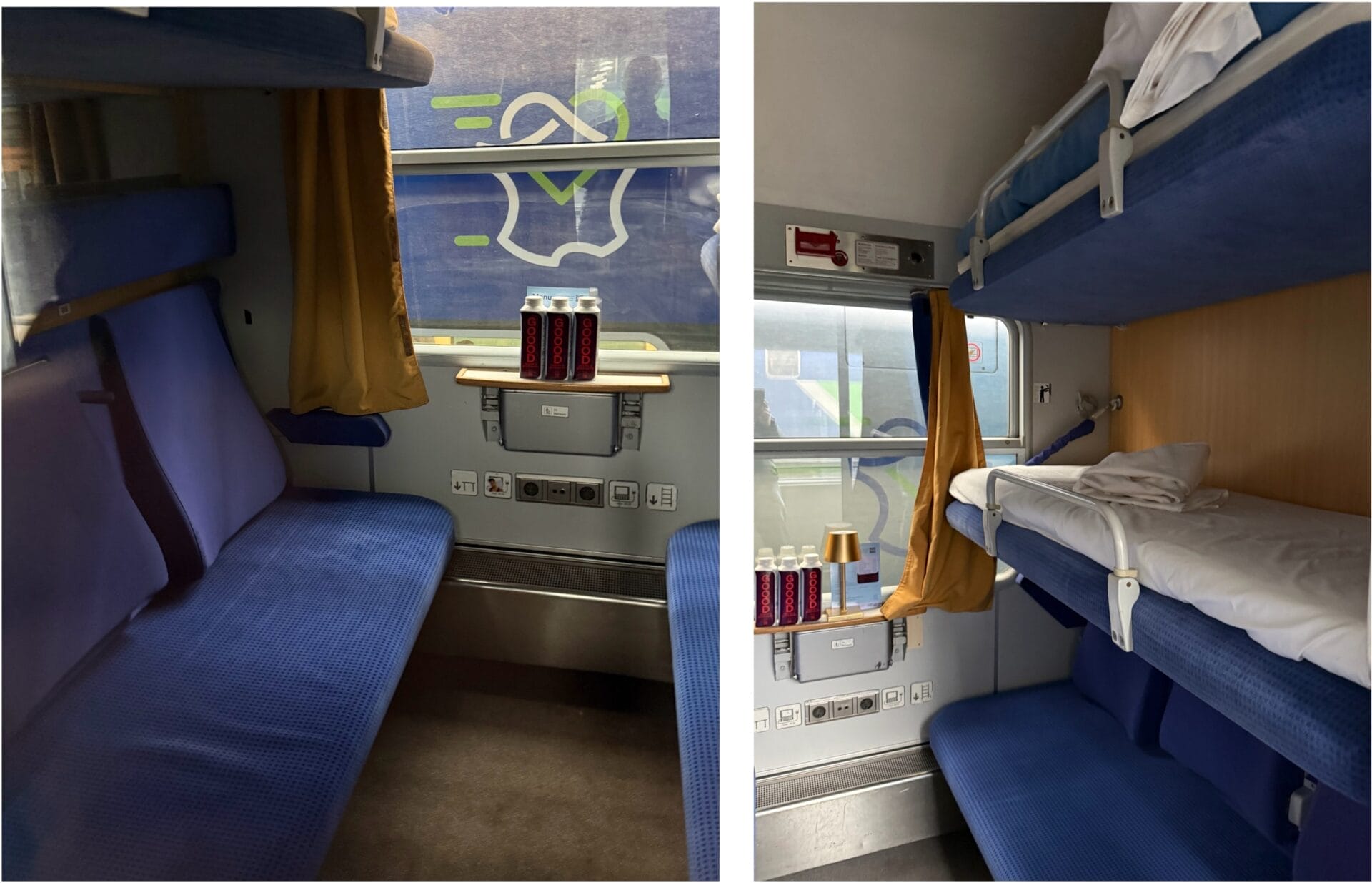
The “Comfort Plus” sleeper car has eleven compartments, each accommodating one to three travelers.
In daytime configuration, it offers three seats, with one facing another.
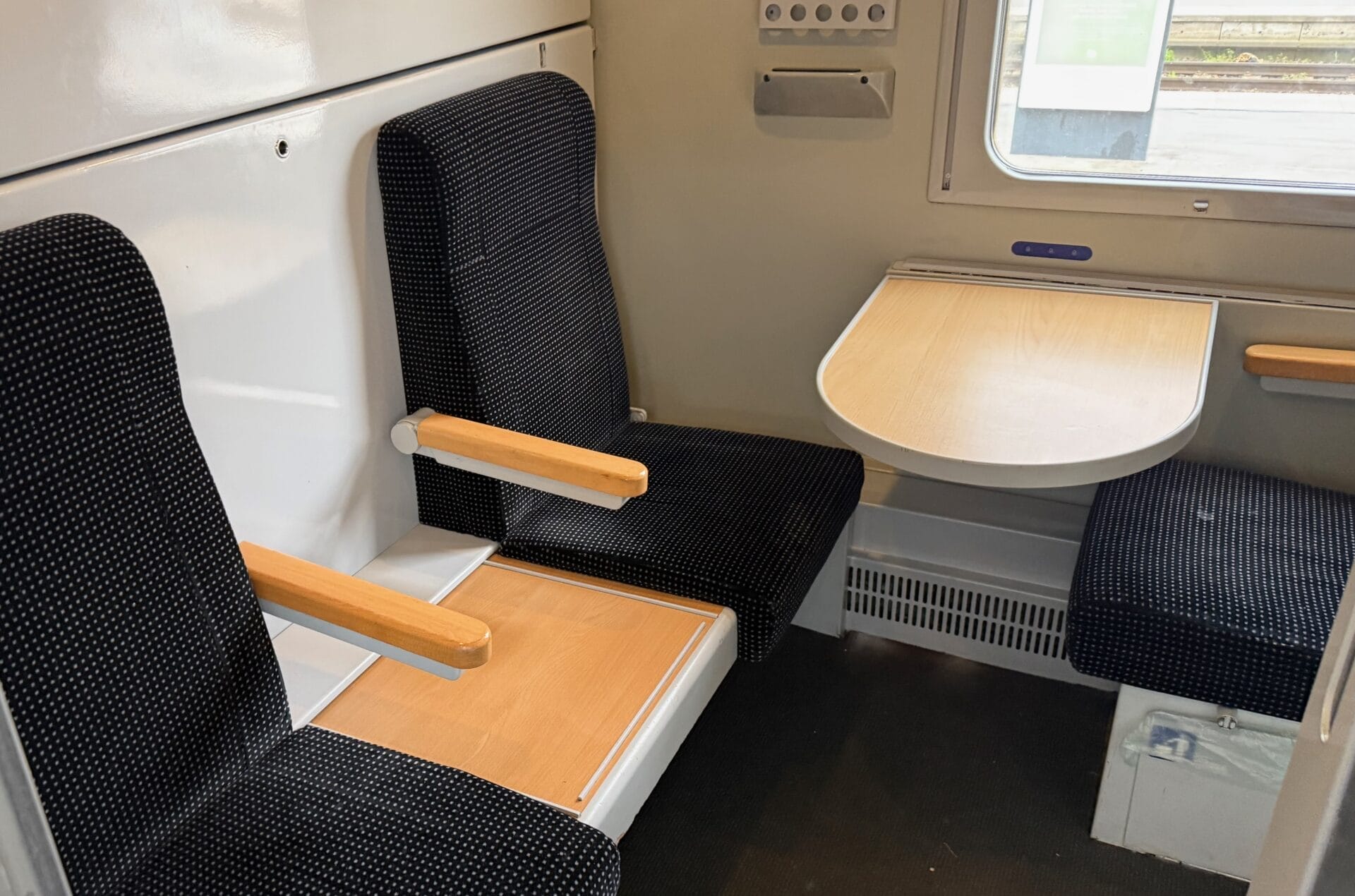
A compartment that converts from day to night
When it’s time to sleep, a steward or hostess folds down two armchairs to make room for two bunk beds. The third bed is fixed and set very high up. It’s best avoided if you’re a bit claustrophobic or older, as you have to climb a ladder to reach it.
Since I’m alone in a private cabin, my bed is already made, and I can settle comfortably into the opposite armchair. The space I have is really generous because, on most night trains I’ve taken, you can’t have both an armchair and a bed at the same time.
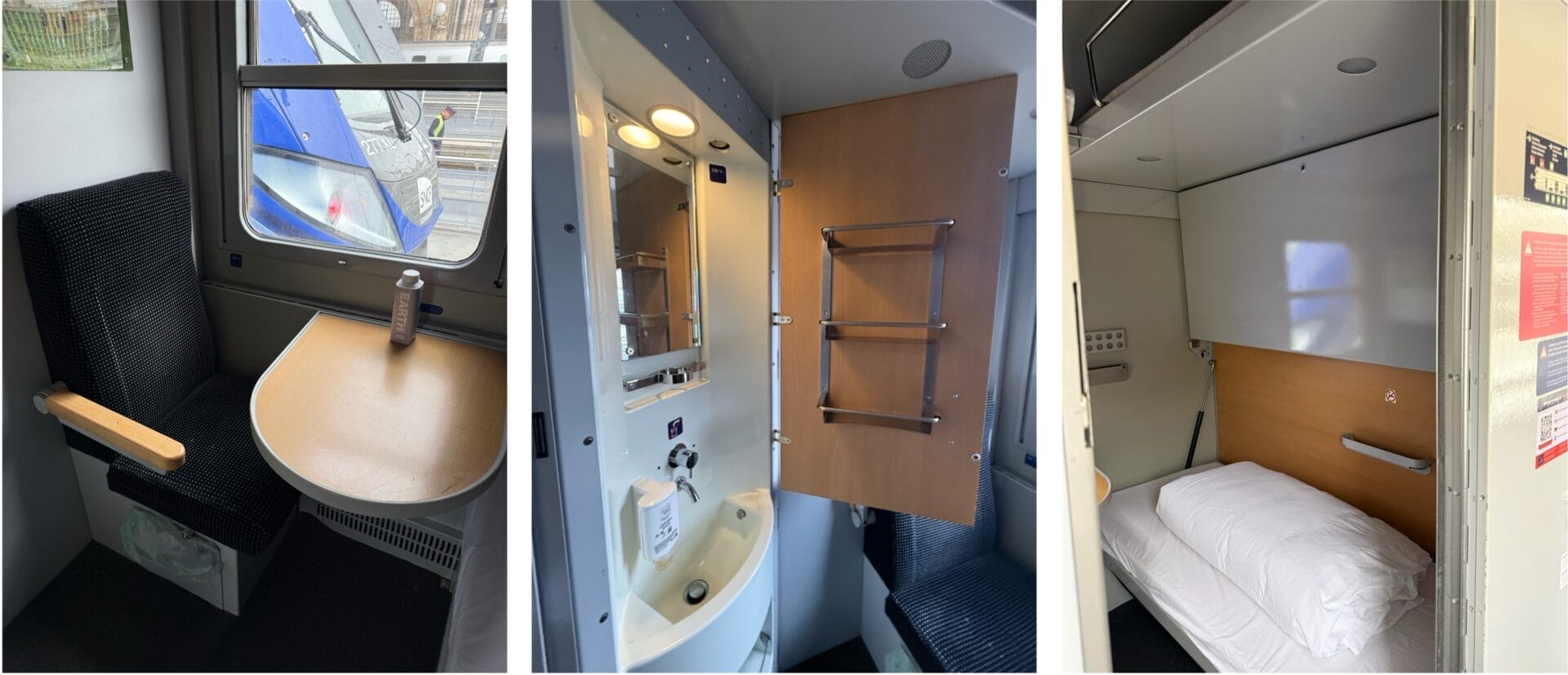
I also have a small closet to hang my coat and a tiny washroom. Two toilets are located at the end of the corridor, as usual.
We leave exactly on time at 6:03 PM. The train manager comes by to check my ticket and give me a few explanations about the trip. If I need help, she tells me the service compartment is in the car next to mine.
Finding a “train path”: the constraints of a new rail operator
I thought we would take the old route from Paris to Brussels via Chantilly and Creil, but we follow a different line.
We take the Paris–Laon line before branching off onto a secondary railway line toward Compiègne. That’s the challenge of being a new operator and finding “the train path,” as rail jargon puts it, so the train can fit into existing traffic.
The best view on the train!
I head to the rear of the train to watch our progress along the tracks—a view that’s no longer accessible to passengers on newer trains.
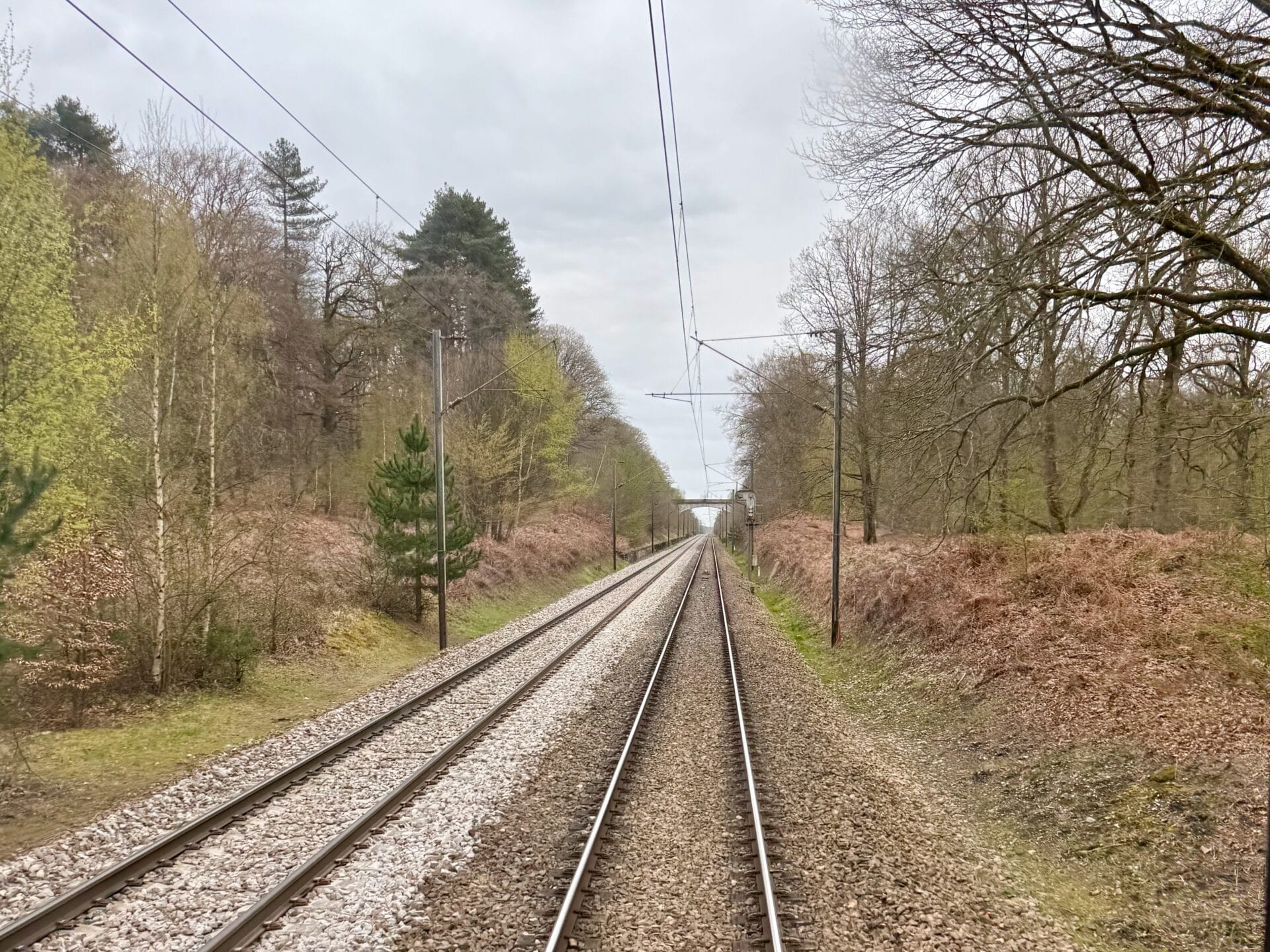
Just before our first stop in Aulnoye-Aimeries, due to an issue on another train, we stop for about half an hour out in the countryside. The staff keep us informed. We finally set off again, but at reduced speed.
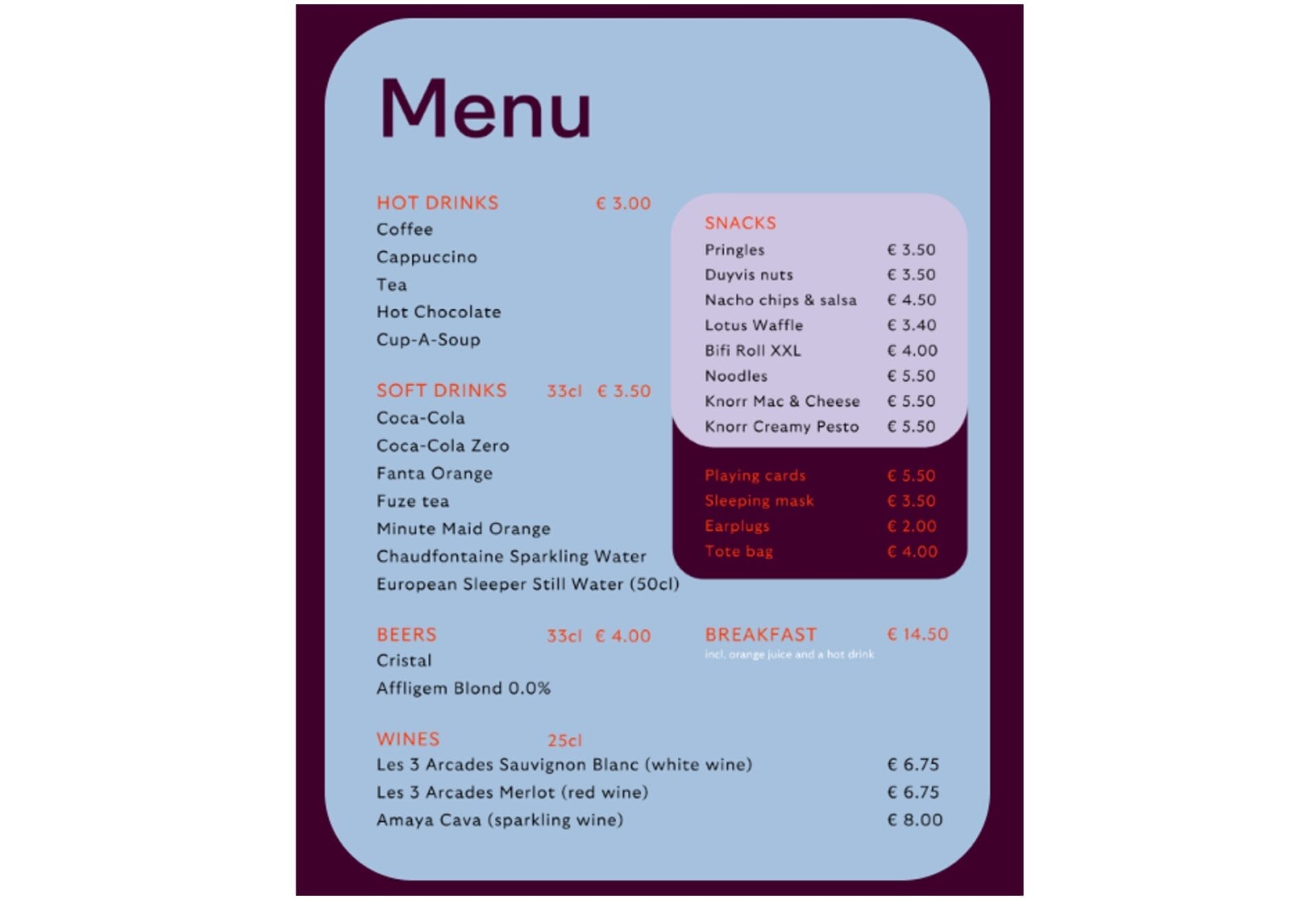
No dining car
There is no dining car on board European Sleeper. I regret it, because I really enjoy that convenience when I travel, but I’m aware that, for economic reasons, rail companies struggle to keep offering it.
That said, European Sleeper has put in place a light offering to tide you over if you get a bit hungry.
I have dinner with a picnic bought at the station
As the scenery rolls by, I take the opportunity to eat the meal I bought just before departure.

These days, at stations or around town, you can find a wide range of salad-, lentil-, or cold-pasta-based dishes, making it easy to put together a nice picnic on a budget. Thankfully, the days when the station buffet only offered a bland ham-and-butter sandwich are long gone.
The key is to be informed before departure, and by checking the company’s website, I knew what to expect.
A “Comfort Plus” perk: European Sleeper offers me a drink to choose from soft drinks and beer.
In the footsteps of the “Étoile du Nord” train—without customs checks
Then, without even noticing, we crossed the border into Belgium. It’s one of the achievements of European integration that we’ve quickly come to take for granted. Just thirty years ago, we would have faced an ID check.
In Aulnoye-Aimeries and Mons, very few passengers join us.
We finally arrive at Brussels-Midi station at 10:10 PM. European Sleeper promised us a vintage experience—we got it! The journey took 4 hours 10 minutes, just like in 1956 on the express train “L’Étoile du Nord”!
I’m not complaining, but that’s one of the advantages of night trains: you let the journey carry you along, and time doesn’t matter, because for much of the trip, we’ll be asleep.
Stop in Brussels: an essential part of the Paris–Berlin service
In Brussels, our train fills up, and we’re almost full. European Sleeper’s decision to replace the Strasbourg stop with Brussels already seems to be paying off. Our onboard crew is replaced by a new one. Brussels is European Sleeper’s operational hub.
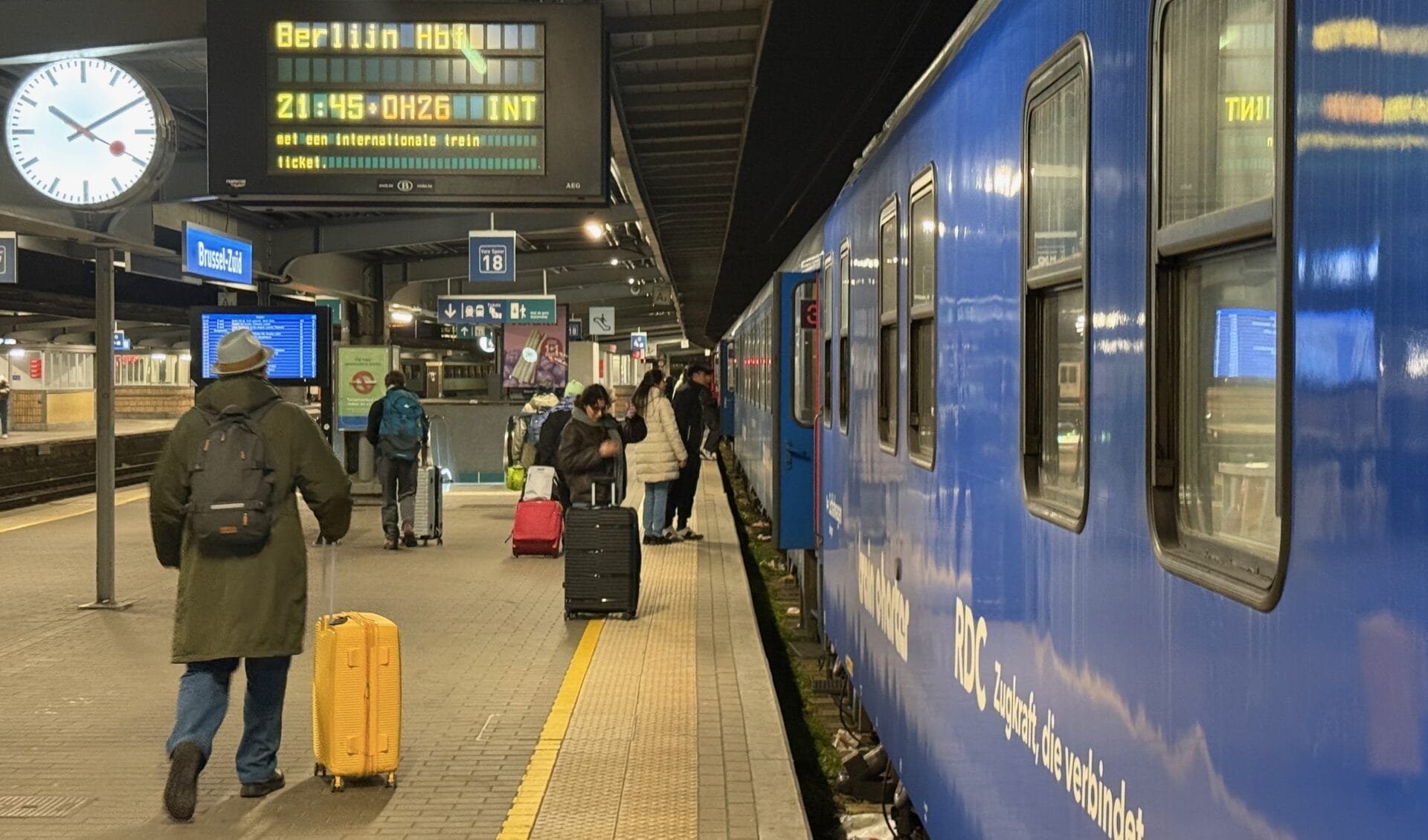
Thanks to the addition of a three-times-weekly Paris–Berlin service, Belgians now benefit from an almost daily frequency (except Saturdays) between Brussels and Berlin.
In fact, since 2023, European Sleeper has also operated a Brussels–Amsterdam–Berlin train, which was extended to Prague in 2024.
A night on board under a cozy duvet
10:30 PM. After leaving Brussels, it’s time for me to go to sleep. In “Comfort Plus,” the duvet is thick and the mattress soft. I put in my earplugs to sink into silence and let myself be rocked by the train’s sway—quite noticeable in my venerable car.
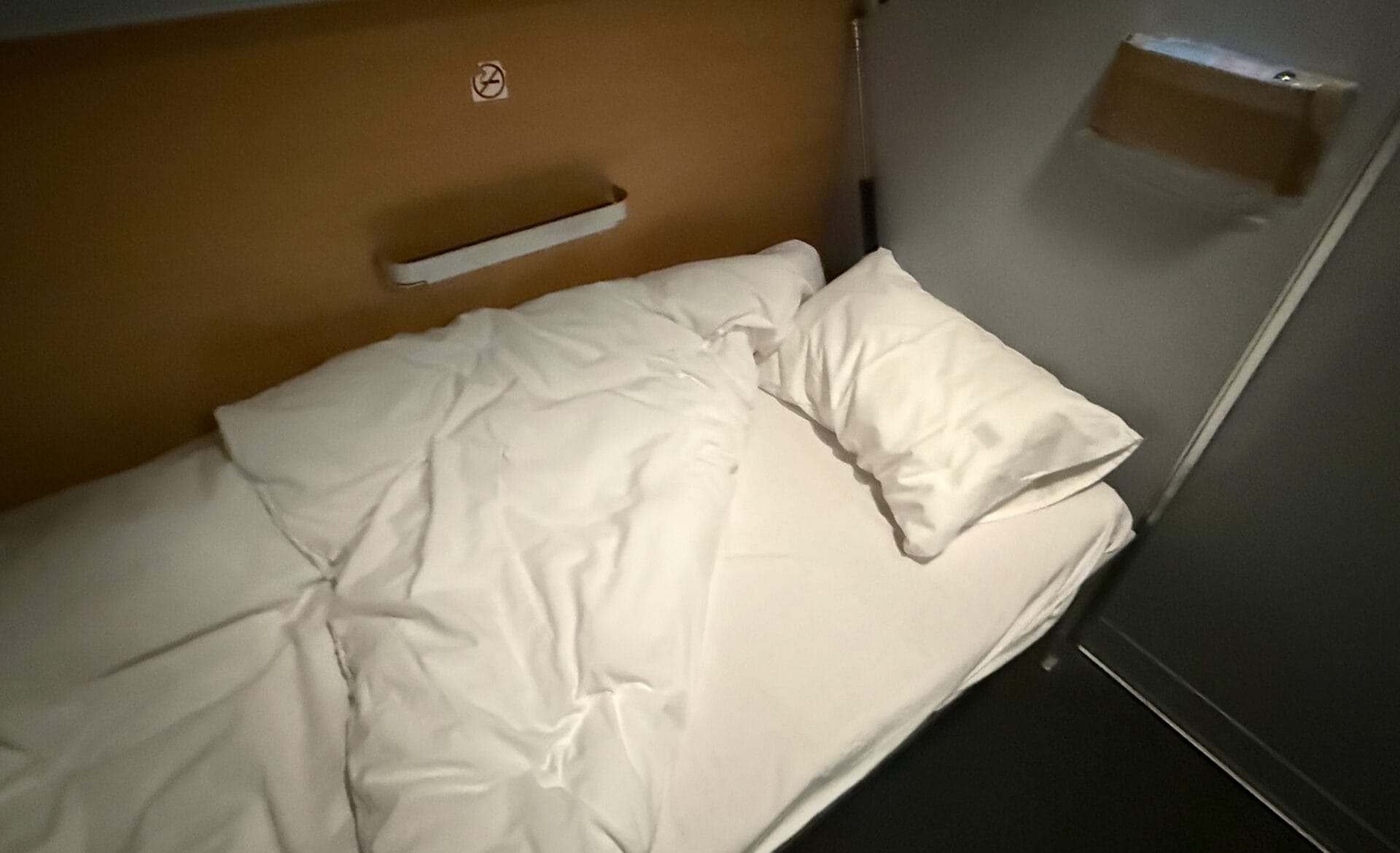
When I wake up, I feel well rested.
I wake up the next morning somewhere between Hanover and Berlin.
Discovering a brand-new landscape by opening the curtains from your bed on a night train is an incomparable experience—one you can only truly appreciate by living it yourself.
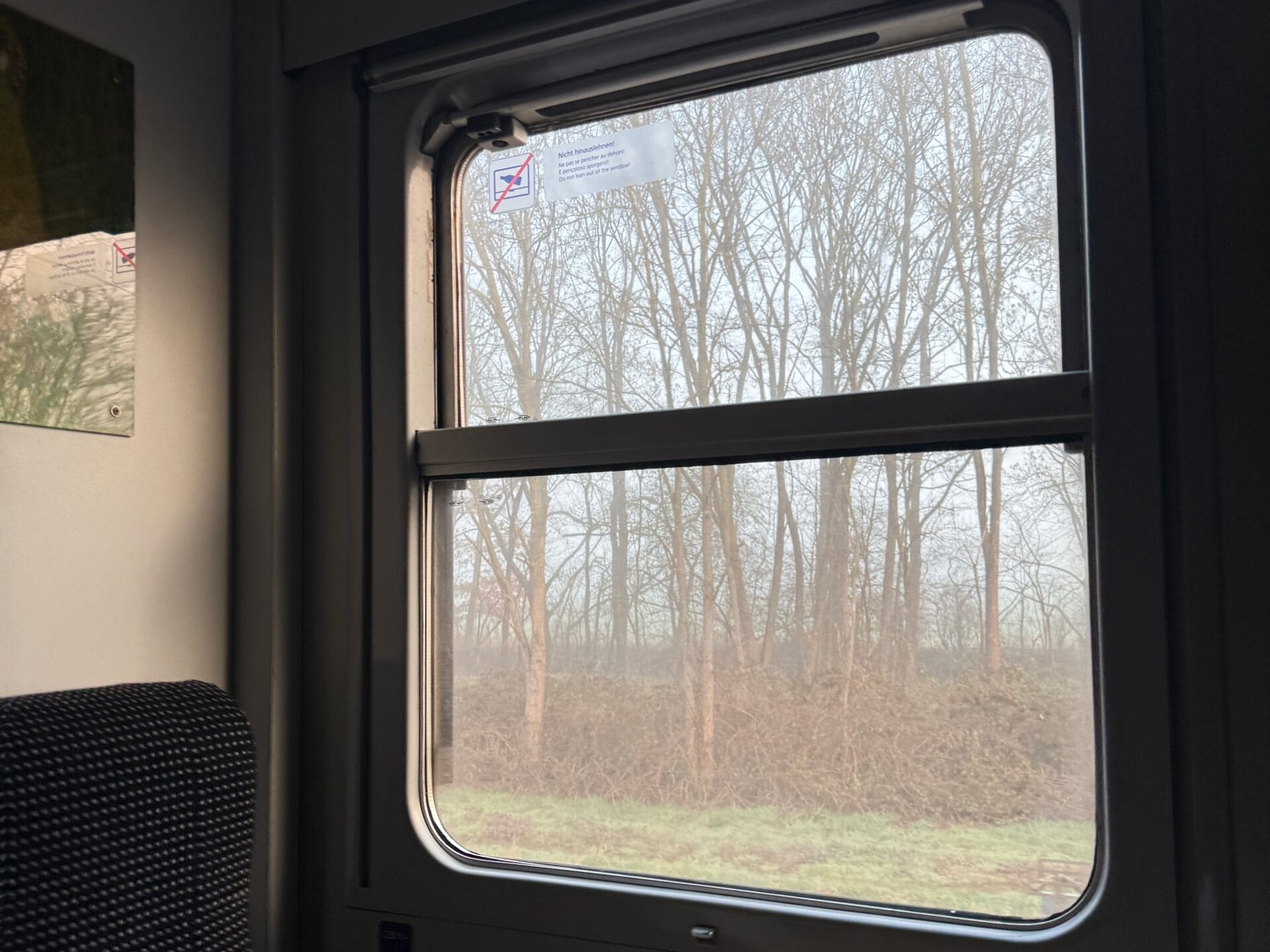
I slept straight through without needing to go to the toilet. If I had, I’d planned to use flip-flops so I wouldn’t have to put my shoes back on in the middle of the night.
I use the only power outlet in the tiny washroom to charge my smartphone.
Last night’s delay has turned into being ahead of schedule!
At 7:00 AM, the train manager announces we’ll arrive at 8:25 AM instead of 9:05 AM. That’s pretty unusual for a night train!
In “Comfort Plus,” breakfast is included in the ticket
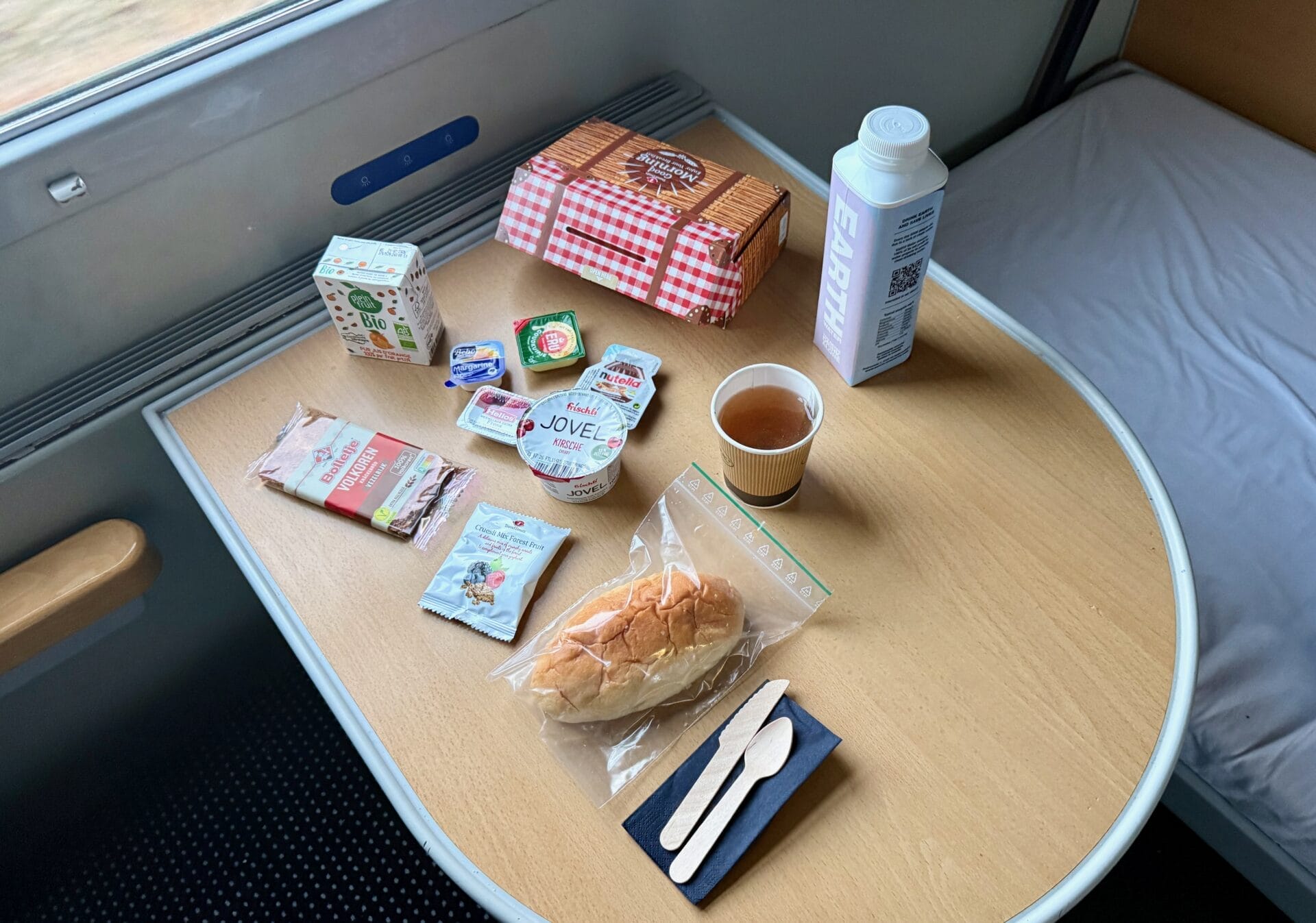
A hostess comes to serve me breakfast, which is included in my “Comfort Plus” ticket. It consists of a small brioche roll, a cereal yogurt, an orange juice, and a hot drink. It’s very simple, but it’s a great way to start the day!
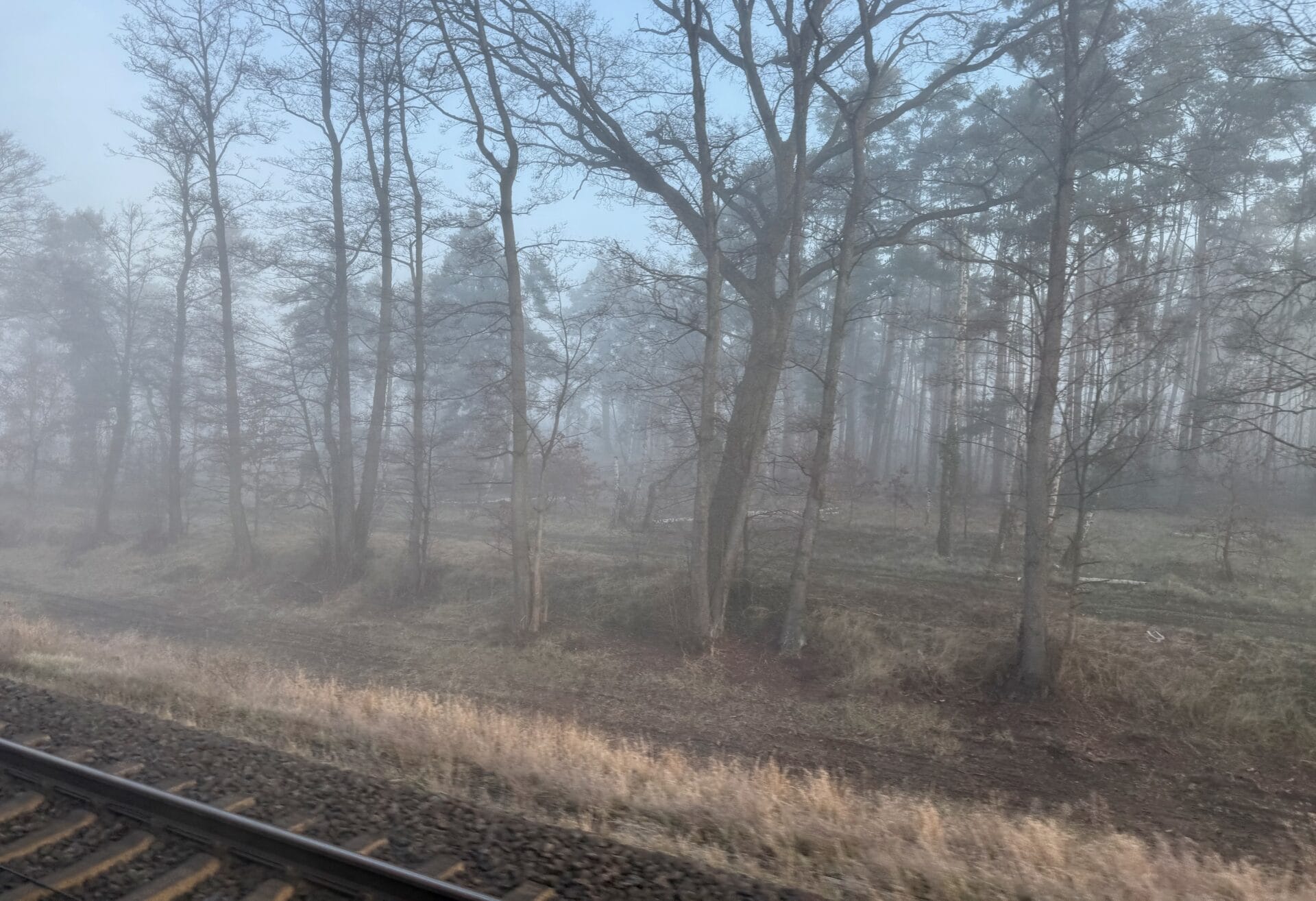
Outside, morning mist slightly veils the blue sky. The Saxony-Anhalt landscape still looks very wintry.

On-time arrival at Berlin Hauptbahnhof.
Just before reaching Berlin, we slow down considerably to let the many ICE trains and commuter services carrying streams of people to work in the capital pass through.
In Brussels, we were 25 minutes late; in Hanover, 40 minutes early; and in the end, we arrive right on time at Berlin Hauptbahnhof.
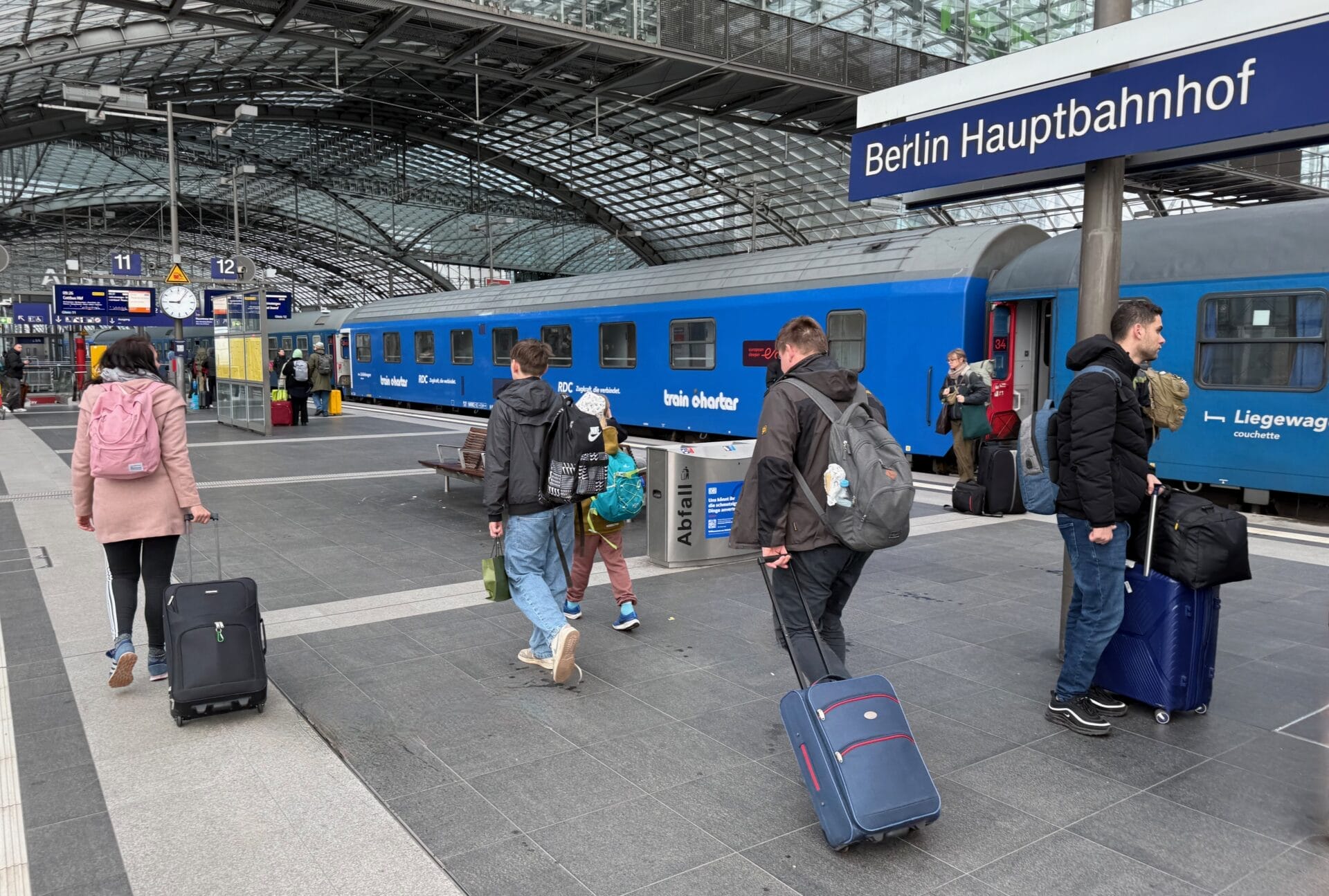
The train stops for just a few minutes to let passengers get off, then heads straight to the depot, where it will be serviced for its return trip, scheduled for that same evening.
A relaxing “slow travel” journey
I feel well rested after this long trip.
Taking a night train means adopting a different relationship with time—especially since European Sleeper can’t guarantee its timetable, even at the last minute. Infrastructure managers still give other trains priority. You can regret it, but you might as well take it in stride.
The different ways to travel on board European Sleeper
In addition to the “Comfort Plus” sleeper class I tried, European Sleeper also offers couchette compartments.
These, also from the German night-train fleet of the 1990s, seem older than the sleeper cars.

There are two comfort levels: “Classic” and “Comfort Standard.”
The “Classic” class
These are five-berth compartments shared with other travelers, but they can be privatized. For sleeping, European Sleeper provides a fitted sheet, a blanket, and a pillow.
The “Comfort Standard” class
These are exactly the same compartments, but with a maximum of three travelers and a mattress topper for more comfortable sleep.
Your choice: air conditioning or an open window!
Good to know for summer: like the sleeper cars, despite their age, they have air conditioning.
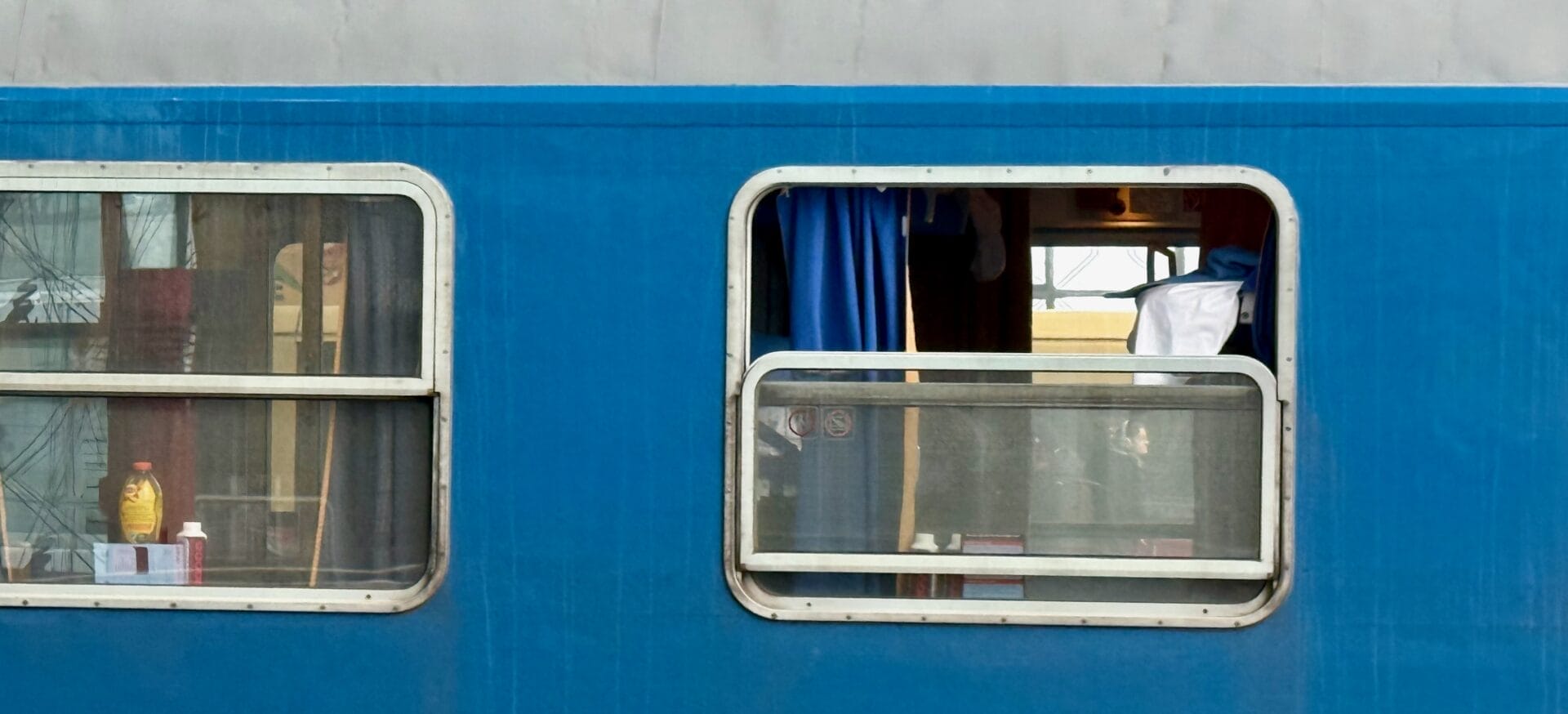
A small detail that I’m sure travelers will appreciate: the ability to open the couchette-car windows, as in the old days, to breathe in the fresh air.
Power outlets are located under the window so you can charge your smartphone.
A young crowd and a well-filled train
On my trip, couchette passengers were mostly in their twenties or thirties, while those in sleeper cars were more often between 40 and 60.
I found the train’s strong occupancy rate encouraging, given that operations have only just begun. Even before the first run, European Sleeper announced it had already racked up 25,000 bookings!
Entry-level: seating seats
European Sleeper offers seating in its “budget” class at very affordable prices.
European Sleeper: an original business model
European Sleeper has only been around for three years, but it has already pulled off its bet in the night-train market.
It wasn’t a given, as another start-up, Midnight Trains, had to throw in the towel with its train-hotel concept, which failed to convince major investors.
Night trains: a market abandoned by the big rail companies
The major national operators, such as SNCF and DB, have abandoned night trains. They are now trying to convince public authorities that only daytime high-speed trains are profitable, repeatedly stressing that night trains cannot be viable without government subsidies.
Yet beyond a distance of 1,000 km, overnight travel is better suited than the daytime trip I’ve already experienced from Paris to Berlin.
On a long journey, it’s far more pleasant to travel while sleeping on a couchette or a bed than to spend more than eight hours stuck in a seat.
A typically Dutch pragmatic and flexible approach
One of the reasons for European Sleeper’s success is its pragmatic, flexible attitude. That doesn’t surprise me, as its two founders, Elmer van Buuren and Chris Engelsman, are Dutch.
Having worked for a long time with KLM and lived in Amsterdam for five years, I know this culture well—and you can see it at European Sleeper.
European Sleeper: a rail company that owns no trains!
The company owns no trains and has no operating staff. That’s a major difference from Nightjet, which is fully owned and operated by Austrian Railways. It’s very innovative.
A locomotive approved for the entire Paris–Berlin route—and brand new for greater reliability.
On the Paris–Berlin route, the leased locomotive from the German company Railpool is a TRAXX MS3, fresh from Alstom’s factories.
That’s excellent news for European Sleeper customers: it means they won’t have to fear the kind of hassles common on French night trains, which are often hauled by old, tired locomotives prone to frequent breakdowns.
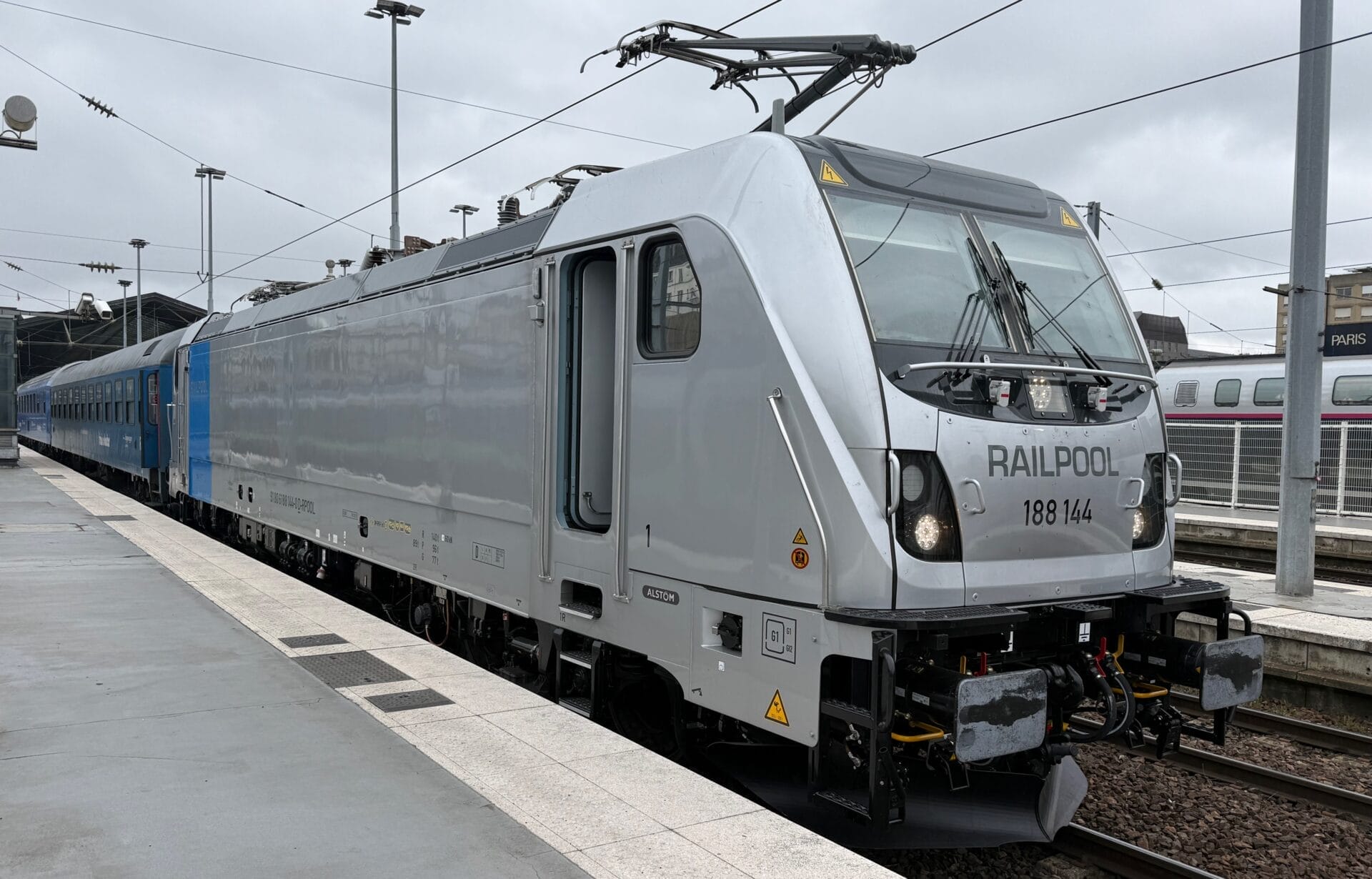
What’s more, the locomotive is approved for use on several European networks and can run the entire Paris–Berlin journey through France, Belgium, and Germany.
This is remarkable, as few international trains can claim it; generally, the locomotive has to be changed at the border.
By contrast, passenger cars over thirty years old—leased!
Rather than waiting several years to get new trains better suited to today’s demand, European Sleeper decided to enter this market immediately—where barriers to entry are high—in order to gain experience.
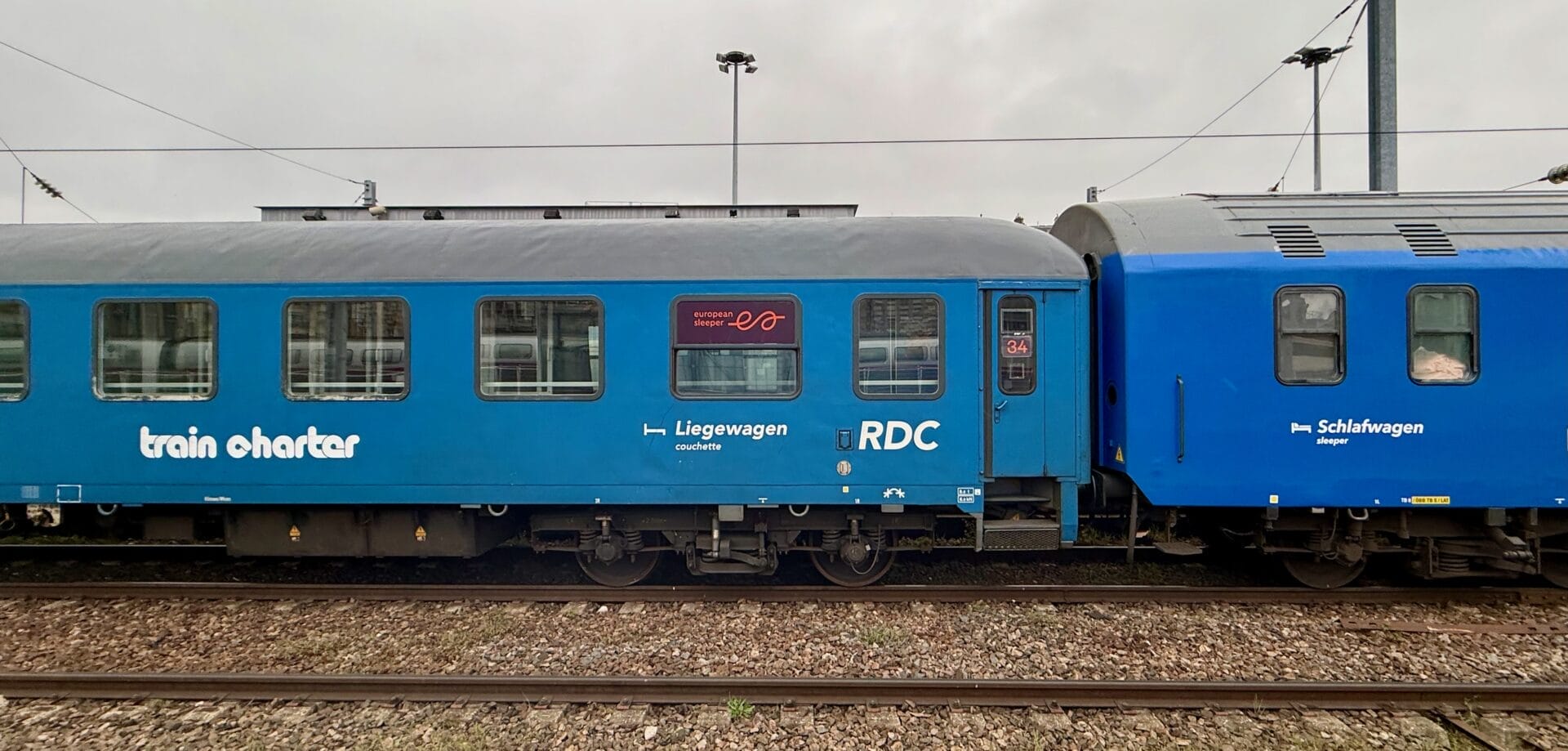
As a result, they leased from RDC the only available rolling stock: sleeper cars and couchettes that are more than 30 years old!
Operating staff not employed by European Sleeper
The trade-off is less control over the product offered and delivered to customers.
Taking on the challenge of a fragmented European rail system
European rail, unlike air transport, is still highly fragmented, and operating international trains is a huge challenge.
Securing the right equipment approved in every country crossed and negotiating train paths with multiple infrastructure managers to run services is a challenge that’s hard to imagine. European Sleeper has learned this—sometimes the hard way.
A “trial and error” approach to gain experience
In 2024, for example, it tried operating a seasonal Brussels–Venice line with a dining car. The experience wasn’t successful, as it was too complex to implement seasonally across five countries.
For that reason, European Sleeper decided not to renew it. Still, it allowed the company to learn a lot—without which it might not have been able to launch the new Paris–Berlin line in under six months, as it did.
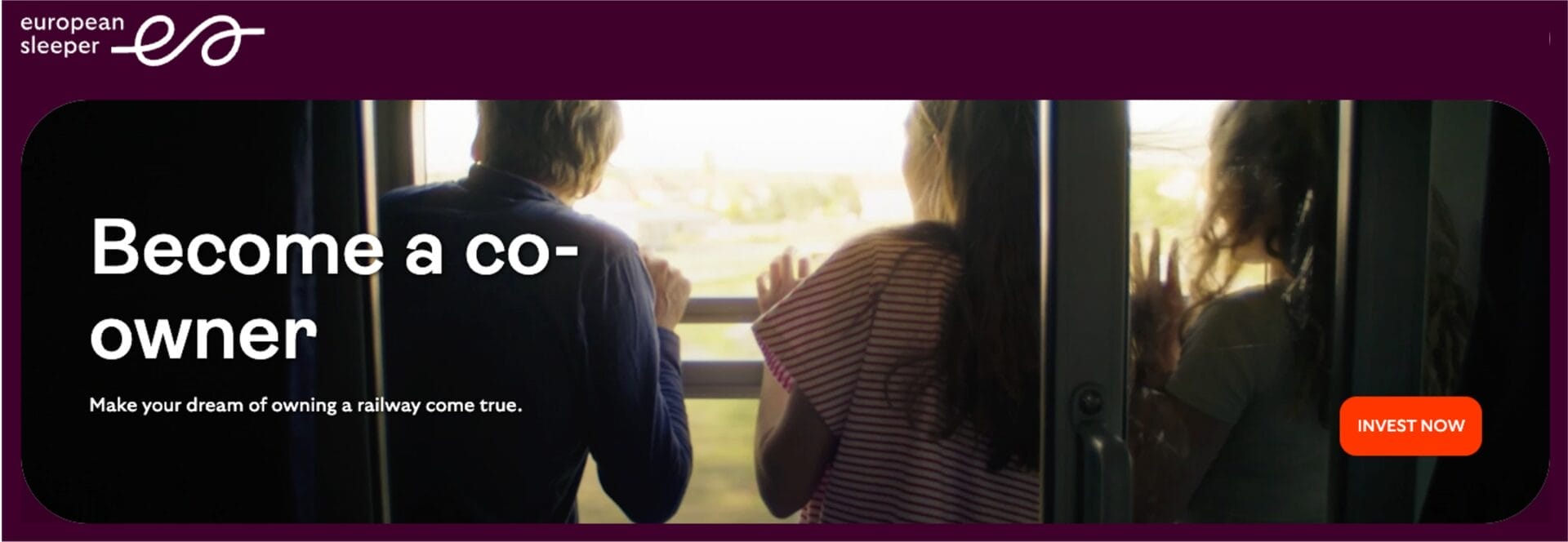
European Sleeper is a cooperative company.
Rather than relying solely on major investors, European Sleeper chose to be a cooperative open to everyone.
Anyone can become a co-owner of European Sleeper and contribute to its expansion. The minimum investment is €160, and 6,000 investors—small and large—have already decided to join the European Sleeper adventure.
Three years after its creation, the network is growing
In 2026, the results are in, and European Sleeper’s network is expanding fast:
- From Paris, a stop on the Paris–Berlin route is planned from July 13 in Hamburg. That’s great news for discovering this wonderful city, which I cover in an article, “Visiting Hamburg on foot or by bike.” It’s also a great opportunity to reach Scandinavia more easily without having to plan a night in an intermediate city, as is currently the case.
- From Brussels, Berlin now benefits from an almost-daily service, and Prague is served three times a week. A new connection will be added in September 2026 to Zurich, Como, and Milan.
- From Amsterdam, it’s possible to reach Berlin and Prague.

A future that looks bright
European Sleeper already has other projects, such as a future Amsterdam–Barcelona in 2028.
My verdict on my Paris–Berlin train trip with European Sleeper
As a reminder, I traveled in the best conditions: in a sleeper car and a private cabin.
What I liked:
- The “European Sleeper” spirit: dynamic and positive.
- My very spacious and comfortable cabin, both in day and night mode.
- My cozy bedding.
- The kindness of the onboard staff.
- On-time departure from Paris and on-time arrival in Berlin despite the hiccups we had along the way.
- The brand-new locomotive, a guarantee of good reliability.
- The night train’s “slow travel” and vintage feel.
- Departing from Gare du Nord in Paris rather than Gare de l’Est.
What I disliked:
- The worn-out passenger cars, with a number of malfunctions such as doors or toilets out of service.
- Service that can be a bit hit-or-miss at times, but that’s down to the fact we’re still in the run-in period, and everything should settle down fairly quickly.
- The onboard food offering, a bit too limited.
The service still needs improvement, but it deserves to exist—without government financial support—on a line abandoned by powerful rail companies such as ÖBB, SNCF, and DB.
The sooner this line becomes a success, the sooner European Sleeper will be able to acquire newer trains better suited to demand.
We need to support every initiative that contributes to the revival of night trains
That’s why, even if traveling with European Sleeper isn’t yet the night train of our dreams with its vintage cars, we need to support them by traveling on the new Paris–Hamburg–Berlin service, because without this kind of initiative, we won’t be able to bring night trains back in Europe.

Practical tips for your trip with European Sleeper
The must-check reference website to get informed and book
European Sleeper’s website is comprehensive, well structured, and clear.
Booking is very easy
Trips can be booked up to nine months before departure
Traditional rail companies generally prefer not to sell their trains until the last minute, once they’re sure of the timetable.
European Sleeper takes a different approach. You can book your trip up to nine months before departure. The trade-off is that travel times are still indicative. It’s best to know this and avoid tight connections or overly precise appointments.
European Sleeper is a different travel philosophy in the spirit of “slow travel”. With high-speed trains, we’ve somewhat forgotten it, but it’s an experience with real charm, and, paradoxically, it reduces stress.
Sign up for the newsletter to take advantage of deals
I encourage you to sign up for their newsletter so you can be informed about promotions. On my train, for example, it was possible to travel in a privatized “Classic” compartment for a promotional offer of just €120!
A good tip: buy a pass
You can also travel more cheaply with European Sleeper by buying a one-month, three-month, or annual pass. It becomes worthwhile from a single round-trip between the two capitals.
So, if you buy the one-month Holiday Pass for €149, the reservation supplement is €179 in Comfort Plus Single per journey. That makes the Paris–Berlin round trip €507 instead of €780 to €1,160 at the standard fare, depending on the period.
Also note that the Interrail pass is valid on European Sleeper too. In that case, you only need to buy the reservation supplement.
Dynamic pricing: from cheap to very expensive.
Like its predecessor, ÖBB’s Nightjet, European Sleeper has adopted dynamic pricing that changes with demand. The earlier you buy your ticket, the better the fare you’ll get. In the table below, I’ve indicated the price ranges, which can vary from single to double.
Be sure to choose the flexibility you need. The later you want to be able to cancel your trip, the more you’ll have to pay. However, during the European Sleeper booking process, this is explained very clearly.
| Minimum | Maximum | |
| COMFORT PLUS | ||
| Single | €340 | €580 |
| Double (per person) | €170 | €290 |
| Triple (per person) | €140 | €240 |
| COMFORT STANDARD | ||
| Single | €270 | €530 |
| Double (per person) | €140 | €270 |
| Triple (per person) | €110 | €220 |
|
CLASSIC |
||
| One couchette | €60 | €220 |
| Private compartment | €210 | €420 |
| BUDGET | ||
| One seat | €50 | €80 |
Gute Reise!
Bon voyage !
0 Comments