
Traveling by day between Paris and Berlin: does the ICE live up to its promises? I tested it.
Paris – Berlin – Paris: Two Direct Trains, one by Day on the ICE, the other by Night on the Nightjet.
France and Germany are two closely interconnected countries, both economically and politically. However, their capitals, Paris and Berlin, had not been linked by a daily direct train since 2014.
Things changed with the launch of the night train on December 11, 2023, followed by the direct day train on December 16, 2024.
During a trip to Berlin in October 2025, I wanted to test both options: so I took the day train on the way there and the night train on the way back.
This article details my outbound journey by day train, aboard the ICE.
First, I recount my eight-hour journey between Paris and Berlin.
Next, I present my verdict, based on my personal experience, and my analysis of what needs improvement to make the service more competitive.
As a bonus, I present to you Berlin Central Station (Hauptbahnhof), a truly remarkable place.
My return journey by night train with the Nightjet is the subject of a second article.
Eight Hours, from Paris to Berlin, by Direct Day Train.
At the time of my trip, Thursday, October 9, 2025, the direct Paris — Berlin day train was not yet a year old. It is the pride of railway companies SNCF and Deutsche Bahn, partners in this project.
the Line is Operated with an ICE: the German TGV
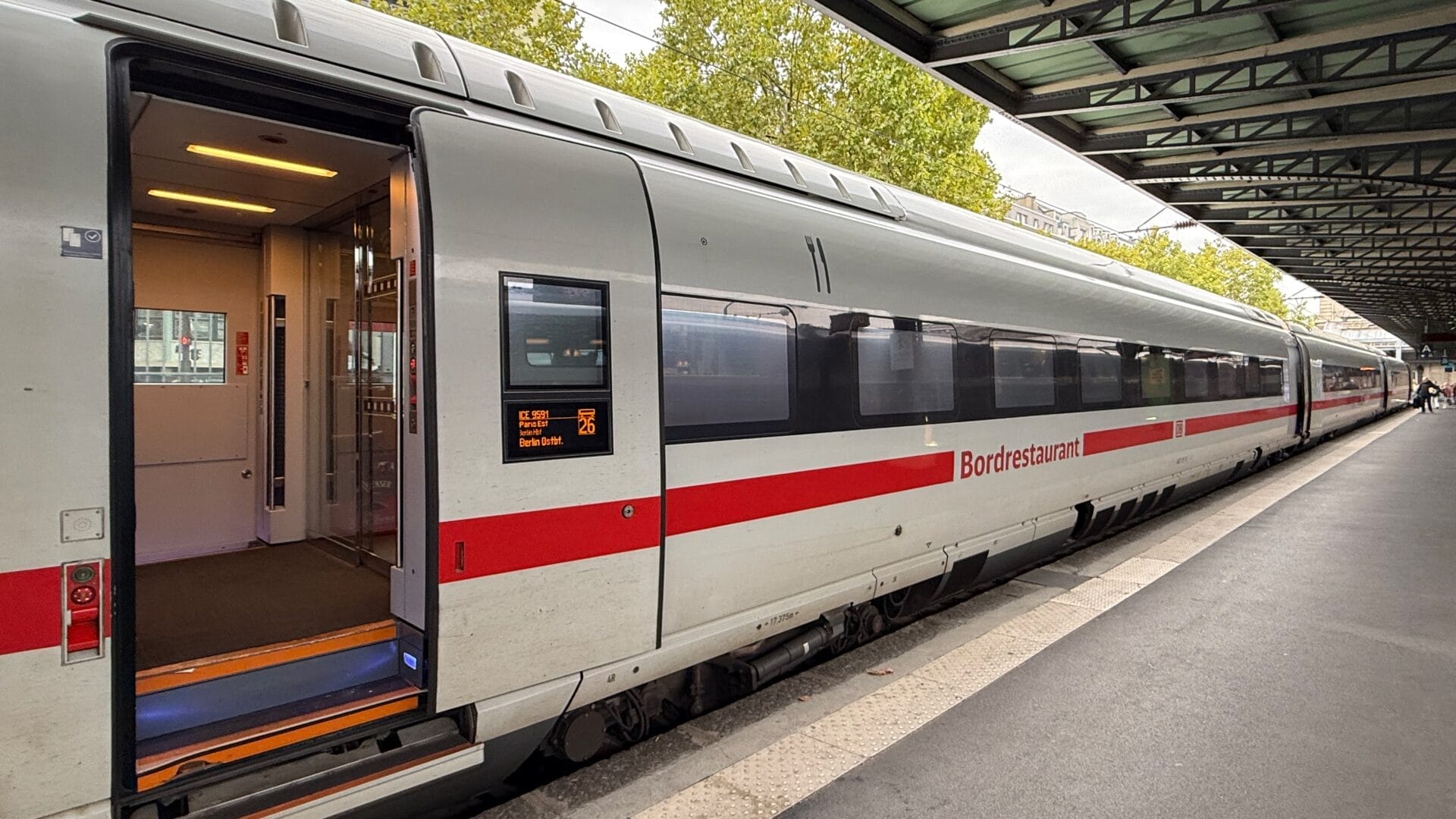
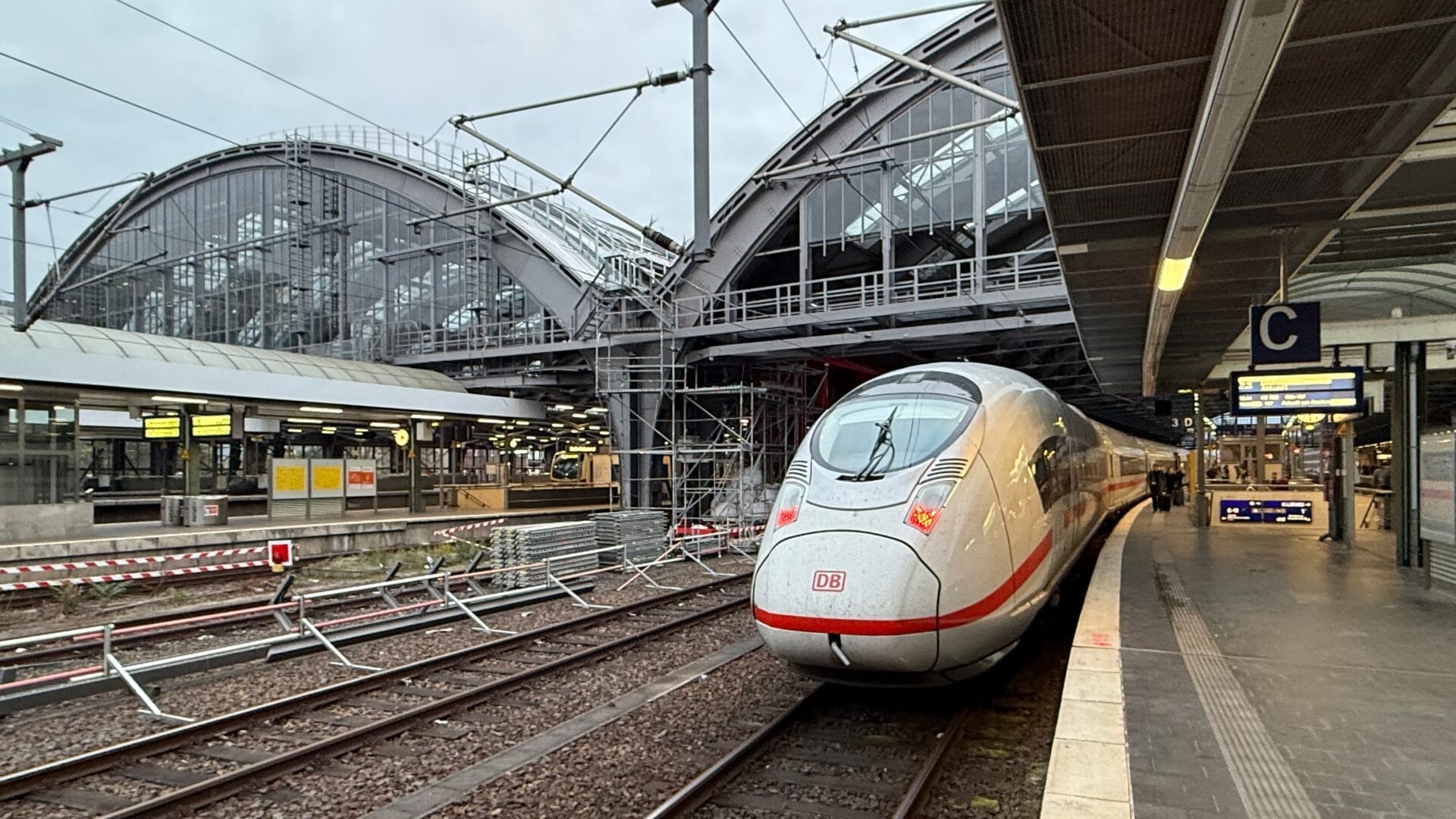
Arriving on the platform at Gare de l'Est in Paris, I discovered an ICE, the German high-speed train, with its beautiful white livery highlighted by a red stripe.
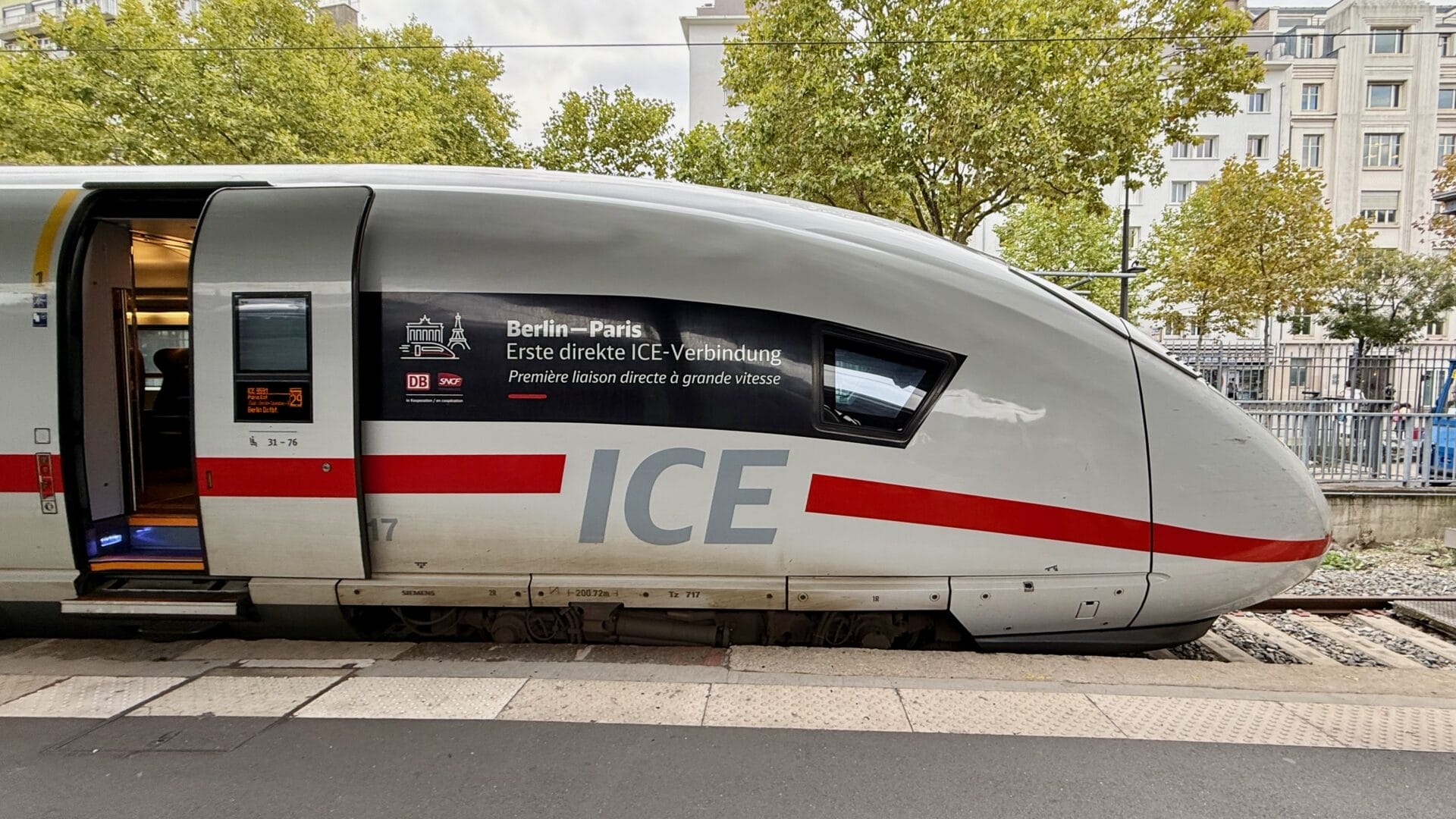
A sticker was added just behind the driver's cabin to indicate that it is the Berlin—Paris train, the first direct high-speed link between the two capitals. It is an ICE 3 Class 407 specially adapted to operate in both France and Germany.
A Journey that is not the most Direct and not Always High-Speed.
My train is scheduled to depart from Gare de l'Est in Paris at 9:55 AM and arrive at Berlin Central Station at 6:03 PM, with intermediate stops in Strasbourg, Karlsruhe, and Frankfurt, for a total of eight hours of travel.
We could have taken a more direct route, passing through Brussels, Liège, Cologne, and Hanover, for a journey of about seven hours instead of eight. Surprisingly, this option was never considered — probably because it would have required involving SNCB, the Belgian railway company, as well as Eurostar, the operator of the Paris—Brussels—Cologne line. A cooperation, perhaps, deemed too complex to implement.

For almost the entire journey in France, we will travel at very high speed (up to 310 km/h). On the German section, between Frankfurt and Berlin, we will also utilize high-speed lines, but with a speed limit of 250 km/h and restricted to specific sections, as indicated on the map. Our ICE will go almost as far as Hanover, which is not the most direct route, which is via the city of Halle.
This difference between the French and German high-speed networks is mainly explained by geography:
- In France, high-speed lines converge towards Paris and only connect major, often distant, cities.
- In Germany, a federal and decentralized country, numerous medium-sized cities spread across the entire territory require service.
In summary, we travel very fast in France, but mainly towards Paris; in Germany, the speed is more moderate, but the territorial coverage across the country is much better.
I Am Traveling First Class
I travel first class. As soon as I boarded, I appreciated the wood paneling in the entrance area, which gave a warm feel. Unfortunately, once in the passenger compartment, the black seats and dark gray carpet created a stark and less inviting atmosphere.

I have a solo seat, well-positioned relative to the window. If it had been clean, I could have enjoyed a beautiful view during my journey. But a whitish film slightly obscures it. It's not a big deal, but I'm a bit exasperated that most European railway companies neglect the cleanliness of their windows. This happens to me too often, and as a blogger, I'm frustrated that I can't take the landscape photos I'd like.
Many Seats without a View
I am fortunate, however, because some ICE seats, even in First Class, are "blind" – positioned on the wall section between two windows.

Subpar Wi-Fi
During the journey, Wi-Fi is available, but it works moderately well, sometimes forcing me to use my phone's 4G, but with poor network access. Fortunately, roaming charges have disappeared within the European Union.
For entertainment, Deutsche Bahn offers an entertainment portal featuring films available in multiple languages, which you can watch on your own tablet or computer. But given the quality of the Wi-Fi, I don't try to take advantage of it.
Paris — Strasbourg in 1 Hour 55 Minutes at 310 Km/H
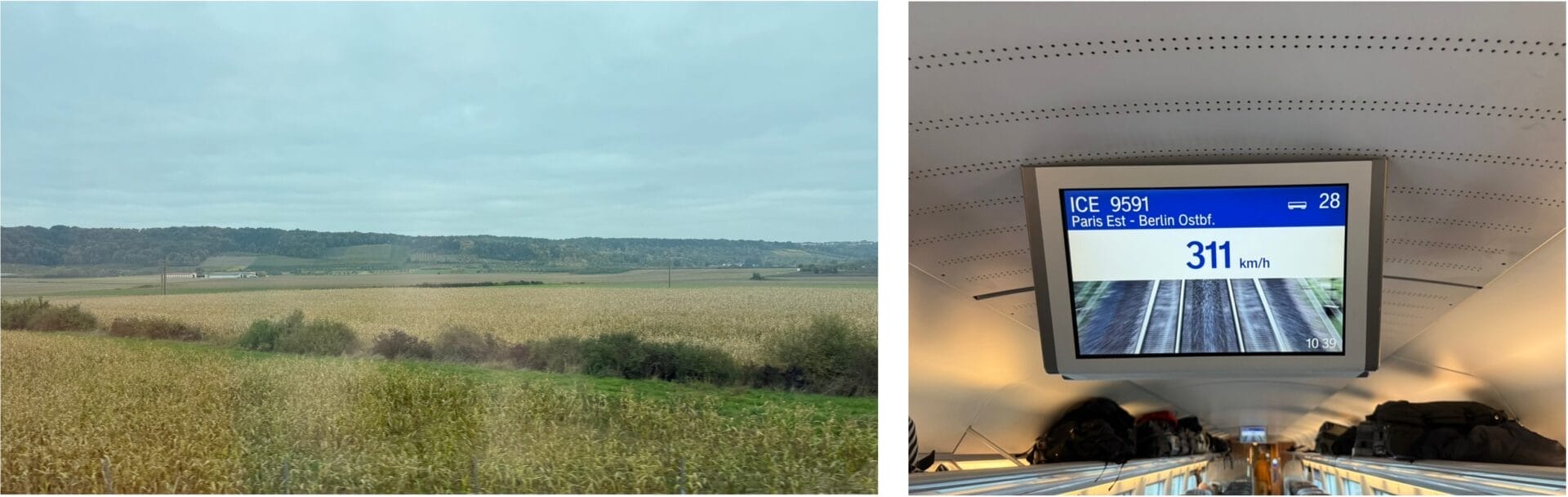
We leave Paris at 9:55 AM, right on time, to join the high-speed line, which takes us at 310 km/h to Strasbourg, my hometown, in one hour and forty-five minutes. Quite impressive!
We cross vast agricultural plains... which we barely have time to see, because our train is going so fast!
Strasbourg, Last Stop before Germany
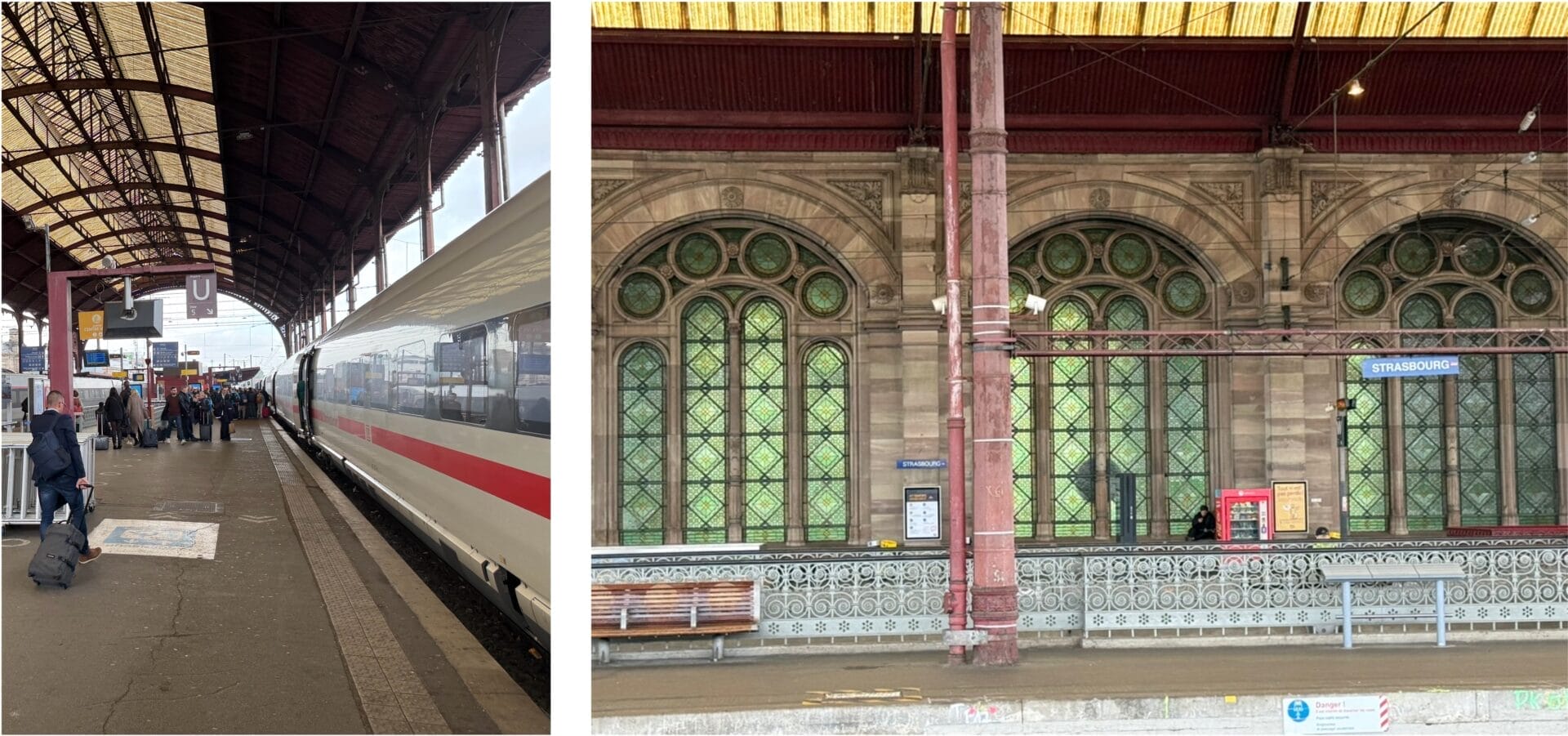
We arrive at Strasbourg station for a six-minute stop. I take the opportunity to get some fresh air on the platform. The Germans built the station at the end of the 19th century, and its style is typical of imperial Prussian stations, such as Hanover or Leipzig.
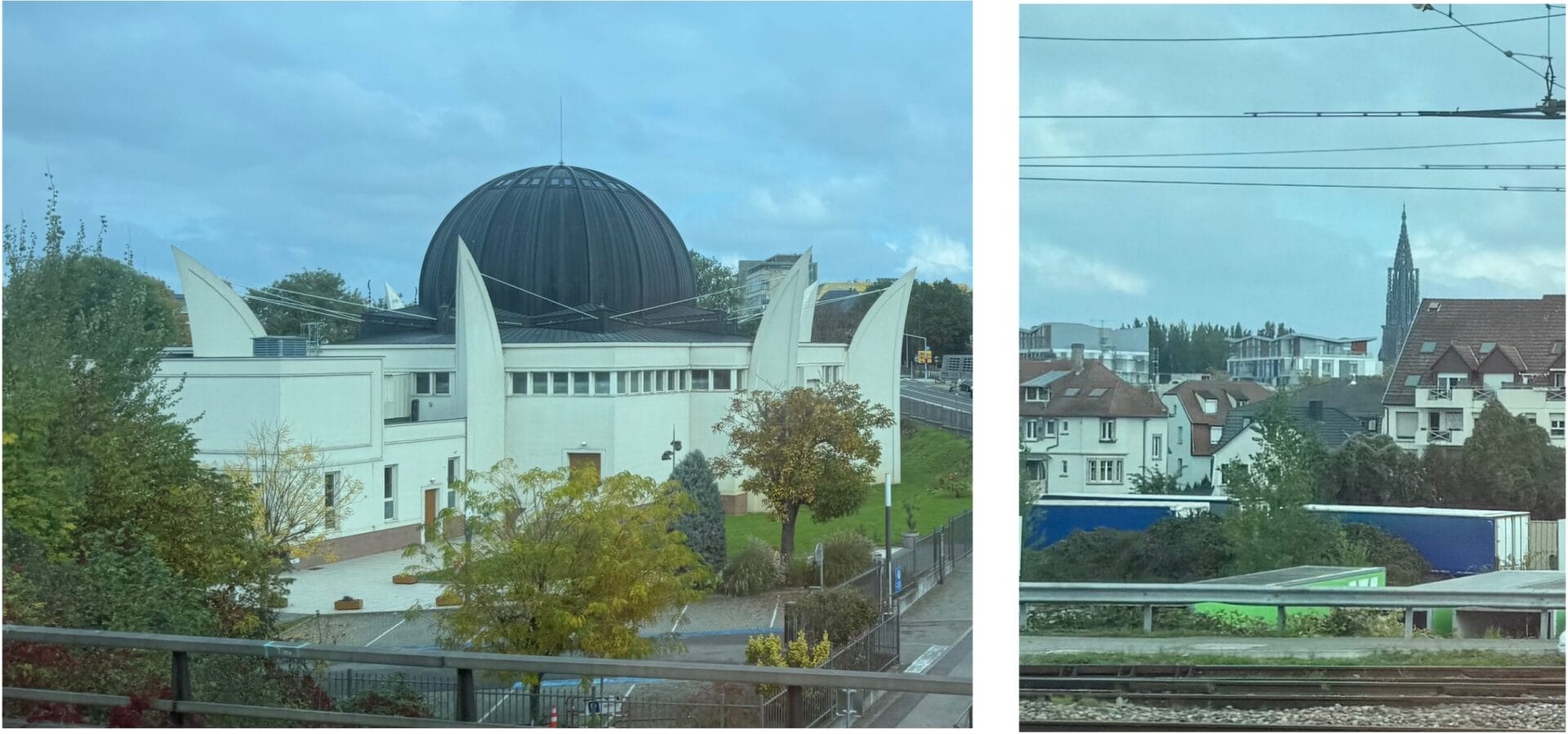
After Strasbourg, we bypass the city from the south, passing right next to the grand mosque and spotting, in the distance, the majestic spire of the famous cathedral, one of the most beautiful in France.
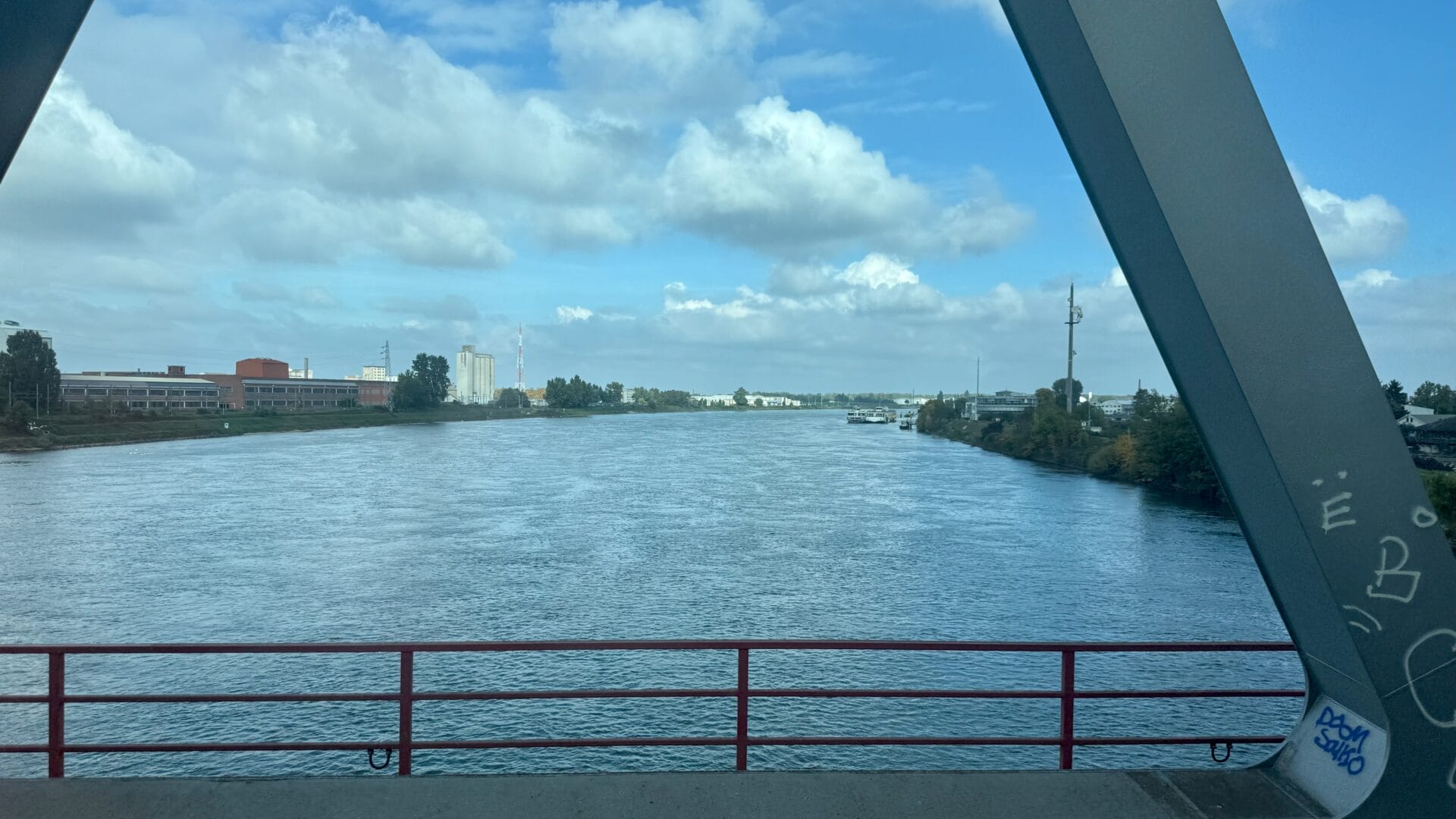
Then we cross the Rhine. I briefly glimpse the famous Europe Bridge, a symbol of Franco-German reconciliation, inaugurated in 1960.
We make an unscheduled stop in Kehl, the German border station. German police board the ICE for a check, but let us leave quickly. No suspicious persons seemed to be on board!
The Highlight of ICE Trains: the Dining Car
A significant asset of German ICE trains is the presence of a dedicated dining car. I go there right after Kehl. On one side, there's a bar for those who wish to buy their meal and return to their seat; on the other, a small area with tables for four or two allows you to eat on site.
A waiter comes to take the order and serves at the table, just like in a restaurant. Of course, it's not gourmet cuisine: the dishes are just reheated on board the train. I choose a chicken tikka masala, served on real crockery, with a glass and metal cutlery. It's pleasant and invigorating.
Traveling First Class, I also had the option of having food delivered directly to my seat. But on such a long journey, I find it nicer to get up and stretch my legs.

From Kehl to Hanover: the Beauty of Hesse's Landscapes
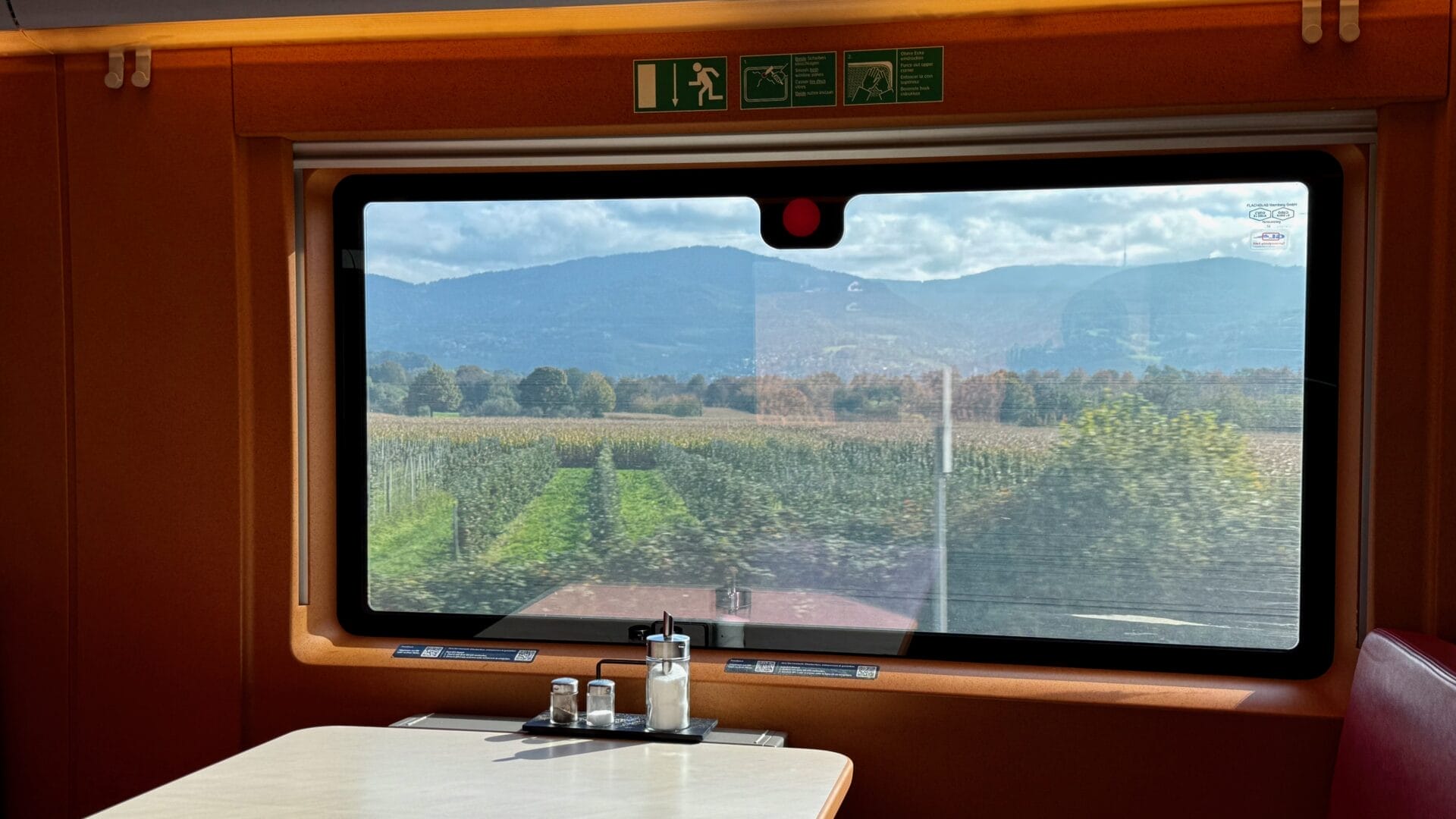
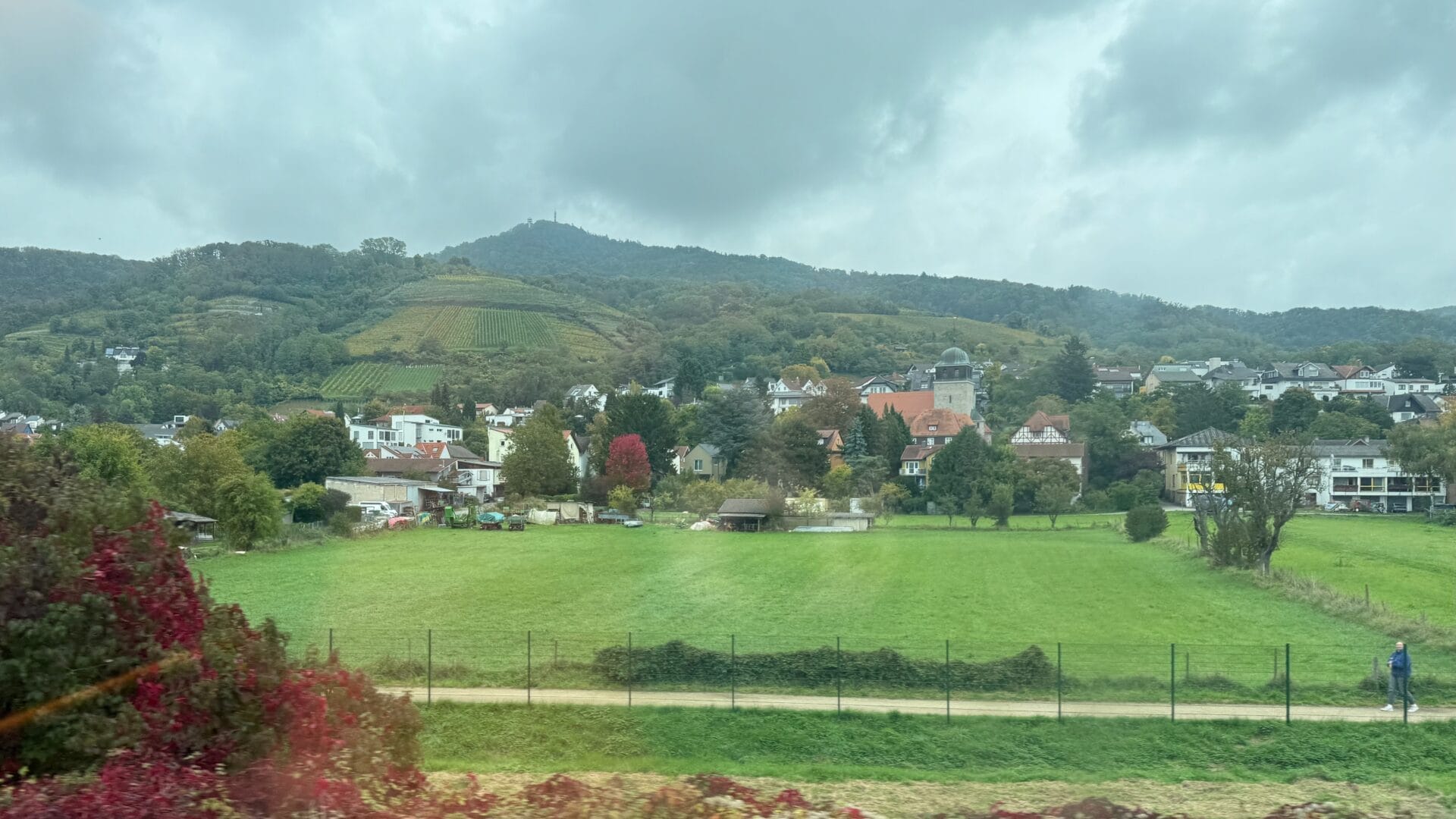
After Kehl, the ICE turns north, and we go up the Rhine Valley, with the Black Forest hills to our right. We spot pretty villages nestled among the vineyards.
We first stop in Karlsruhe, then at Frankfurt Süd, a station on the outskirts of Germany's economic capital. Passengers get on and off; consequently, even if, by my estimate, only about a third complete the entire journey from Paris to Berlin, the ICE, on the day of my trip, is still almost complete.
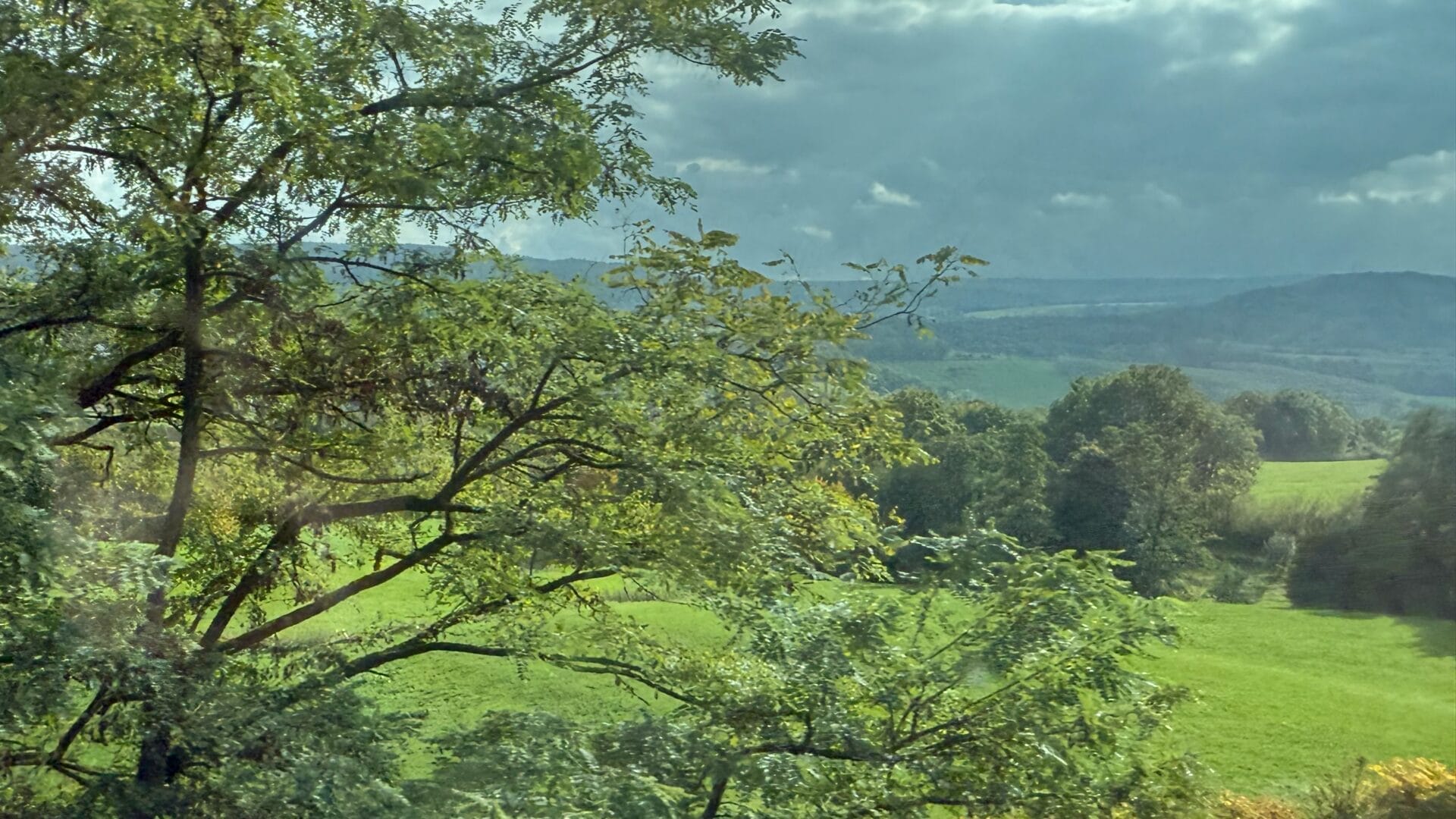
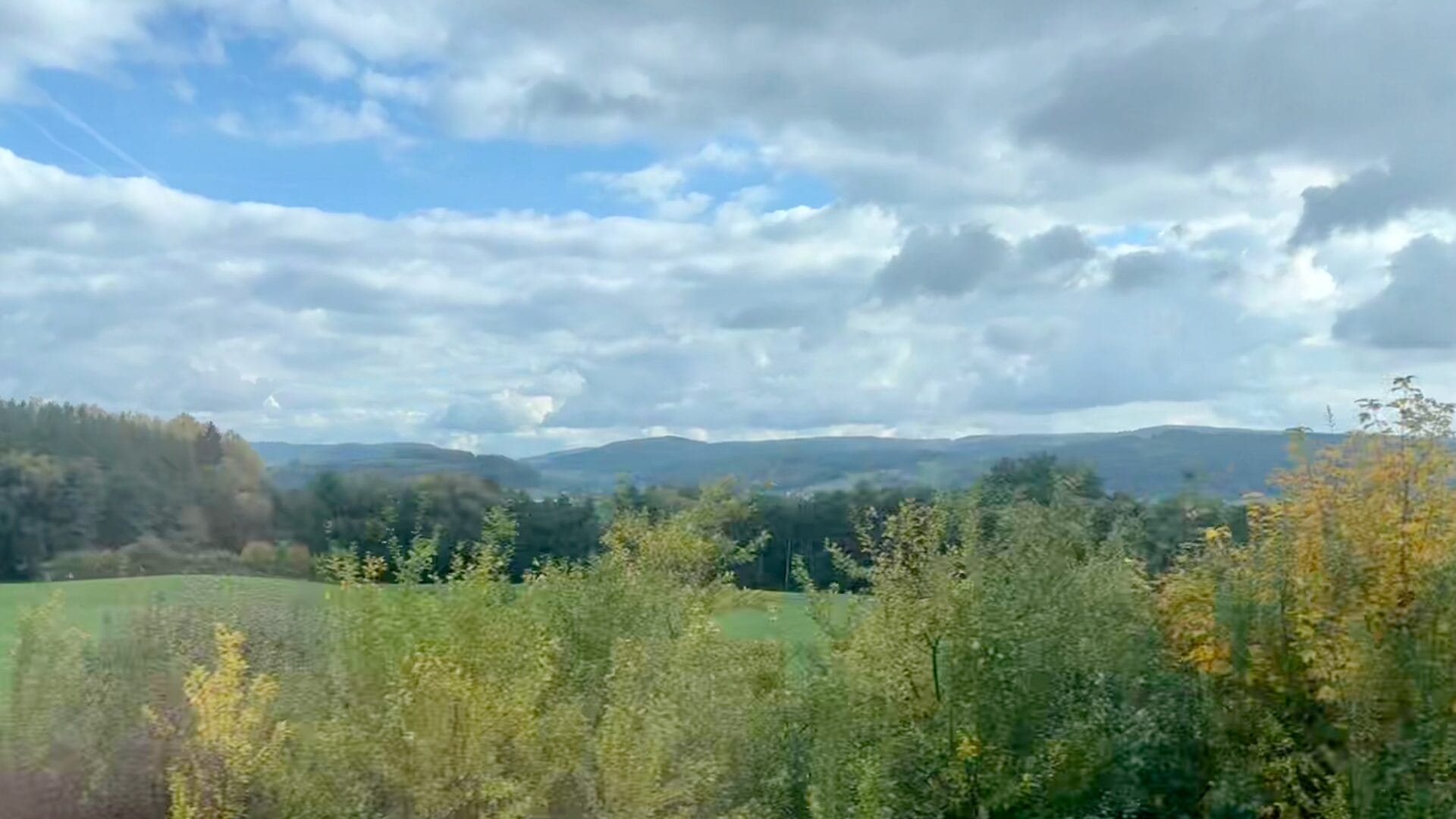
Leaving Frankfurt, our train crosses Hesse. This is the most beautiful part of the journey: we see rolling landscapes, covered with thick forests and meadows.
Near Fulda, the terrain becomes more pronounced: the train crosses numerous viaducts and tunnels, offering brief panoramic views of deep valleys.
Eight Hours of Travel: It's Starting to Feel a Bit Long
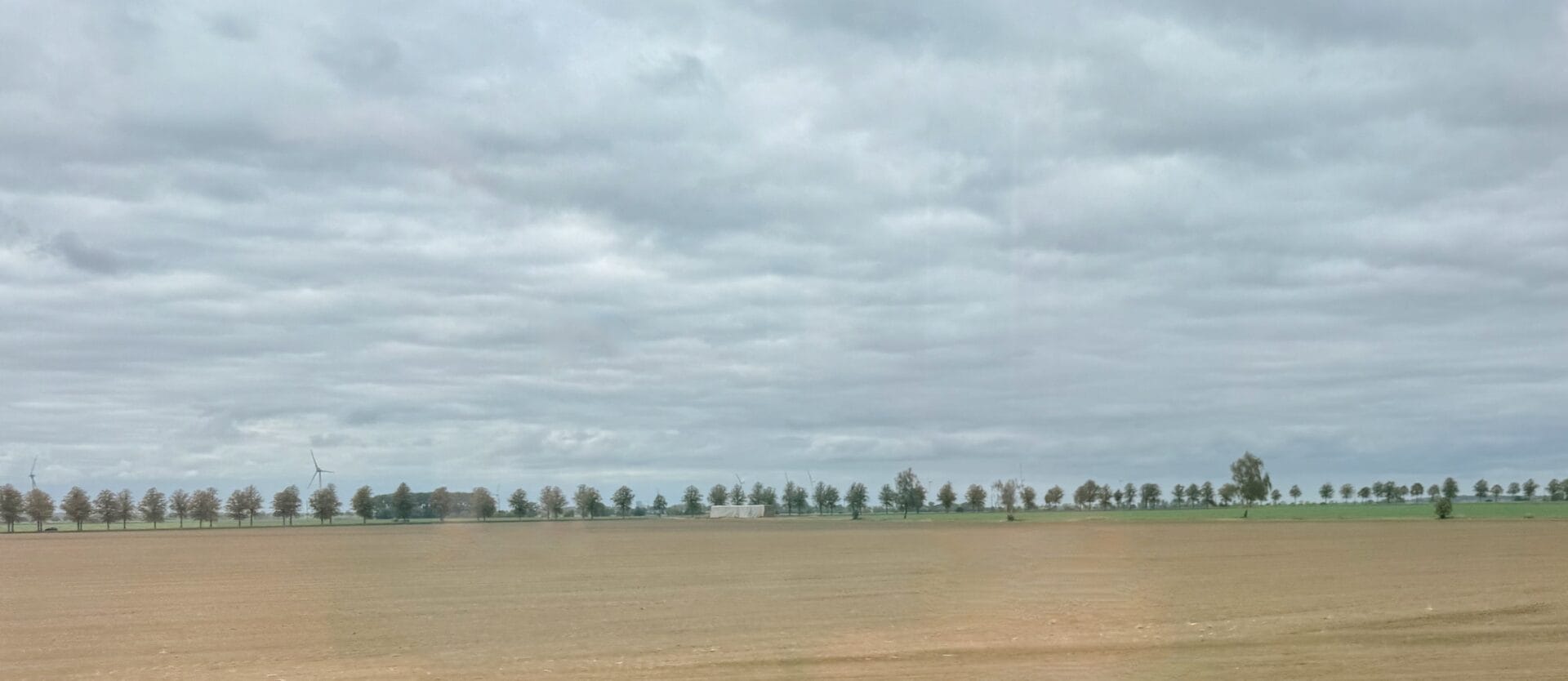
Our ICE goes almost as far as Hanover, then turns due east towards Berlin through the vast plains of cereals and rapeseed in northern Germany. Many wind turbines also dot this region, which is known for its strong winds. We are in Saxony-Anhalt.
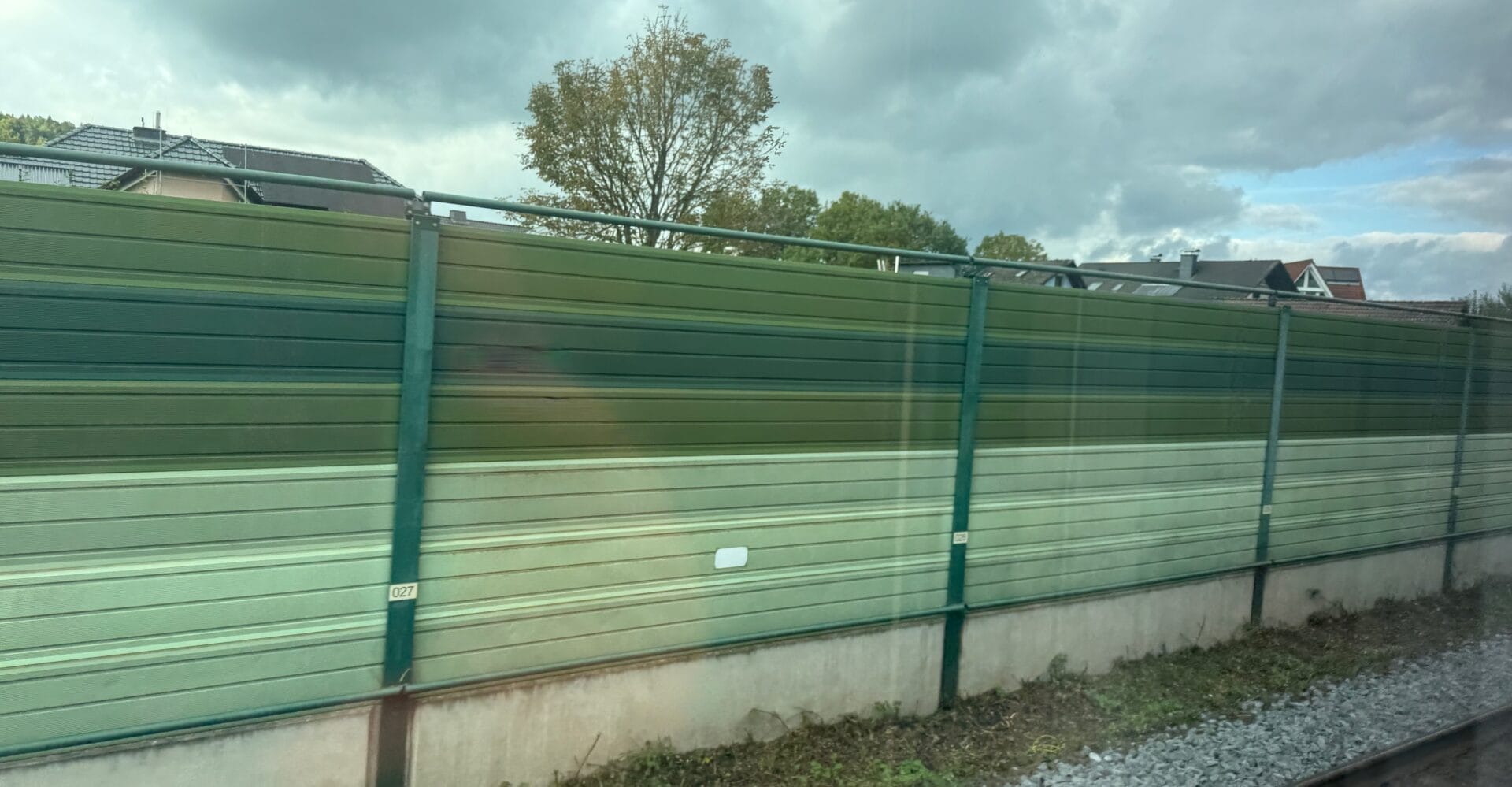
Throughout the journey, the view is often obscured by noise barriers that protect villages from the disturbances caused by high-speed trains.
I find the last two hours of the journey a bit long, especially with a landscape that has become rather monotonous.
A Disappointing First Class Seat
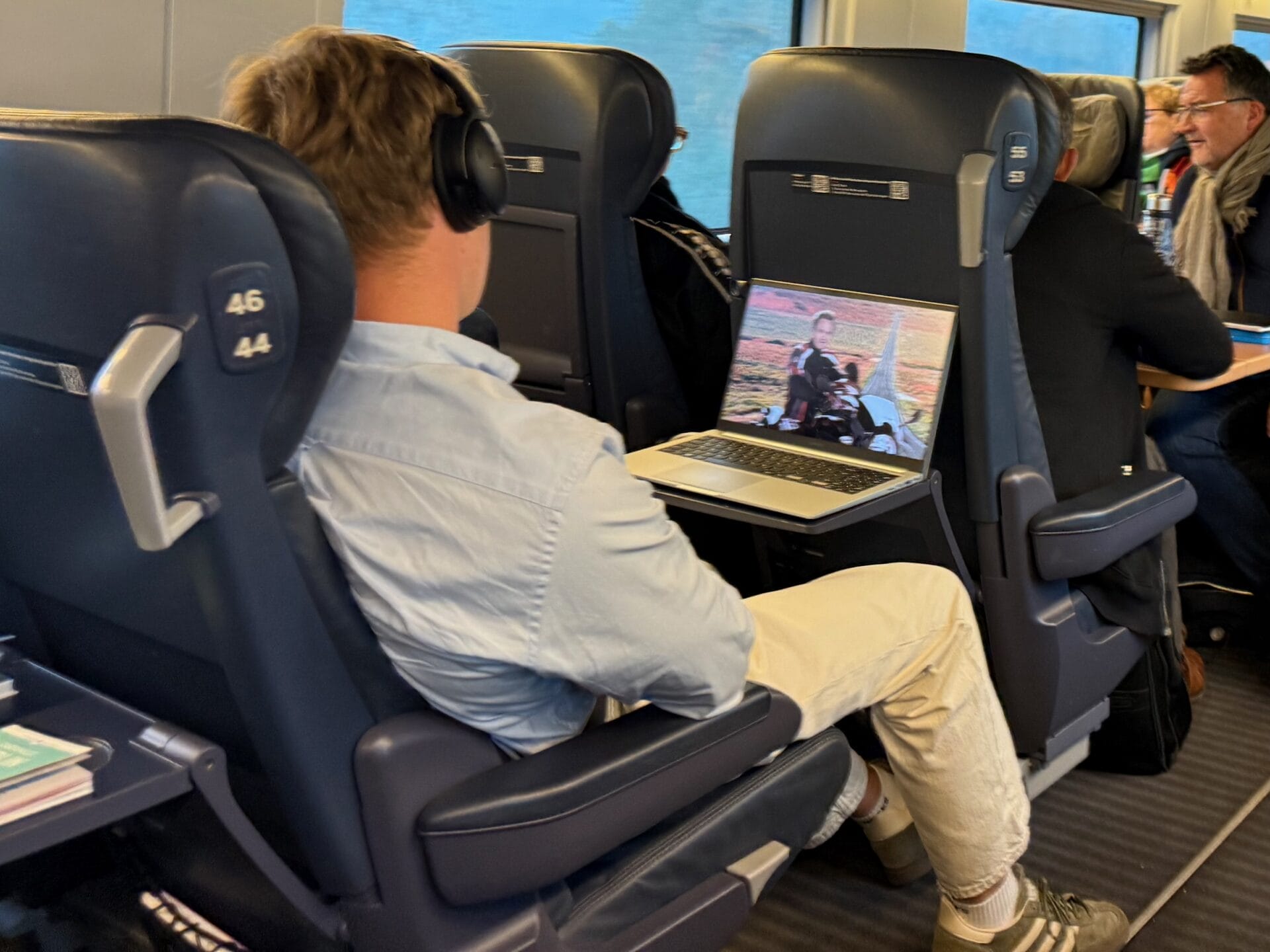
After eight hours of sitting, I can really form an opinion on my seat, whose comfort is not exceptional for First Class.
The leather upholstery is not very pleasant, the seat reclines little, and the tray table is both too small and too far away to comfortably place a laptop on it.
Berlin: Three Stations Served with a Punctual Arrival
Finally, Berlin! Our ICE arrives perfectly on time — quite an achievement, as Deutsche Bahn is known for its many delays due to an aging and overused network. In 2024, 38.5% of trains arrived late.
Our ICE serves three Berlin stations: Spandau in the west, Hauptbahnhof in the center, and the terminus, Ostbahnhof in the east. This is where I get off because it's the closest to my accommodation. After my long hours on the train, I appreciate being able to stretch my legs! But I plan to return later to visit Berlin Central Station, which is remarkable.
My Verdict: Eight Hours is a Bit Long for a Day Train Journey
Paris to Berlin in eight hours, especially with a mid-morning departure, means the entire day is dedicated to travel. I found it too long.
Paris–Berlin: in Reality, a German Domestic Train Extended to Paris
On the ICE I took, I estimate that between 30% and 40% of passengers, or between 100 and 200 people, completed the journey from start to finish at most.
The new timetable, effective from December 2025, provides for an increase from two to five intermediate stops in Germany, including a detour to Frankfurt Central Station, before Berlin. But since it will take a more direct route, the travel time will be slightly shorter.
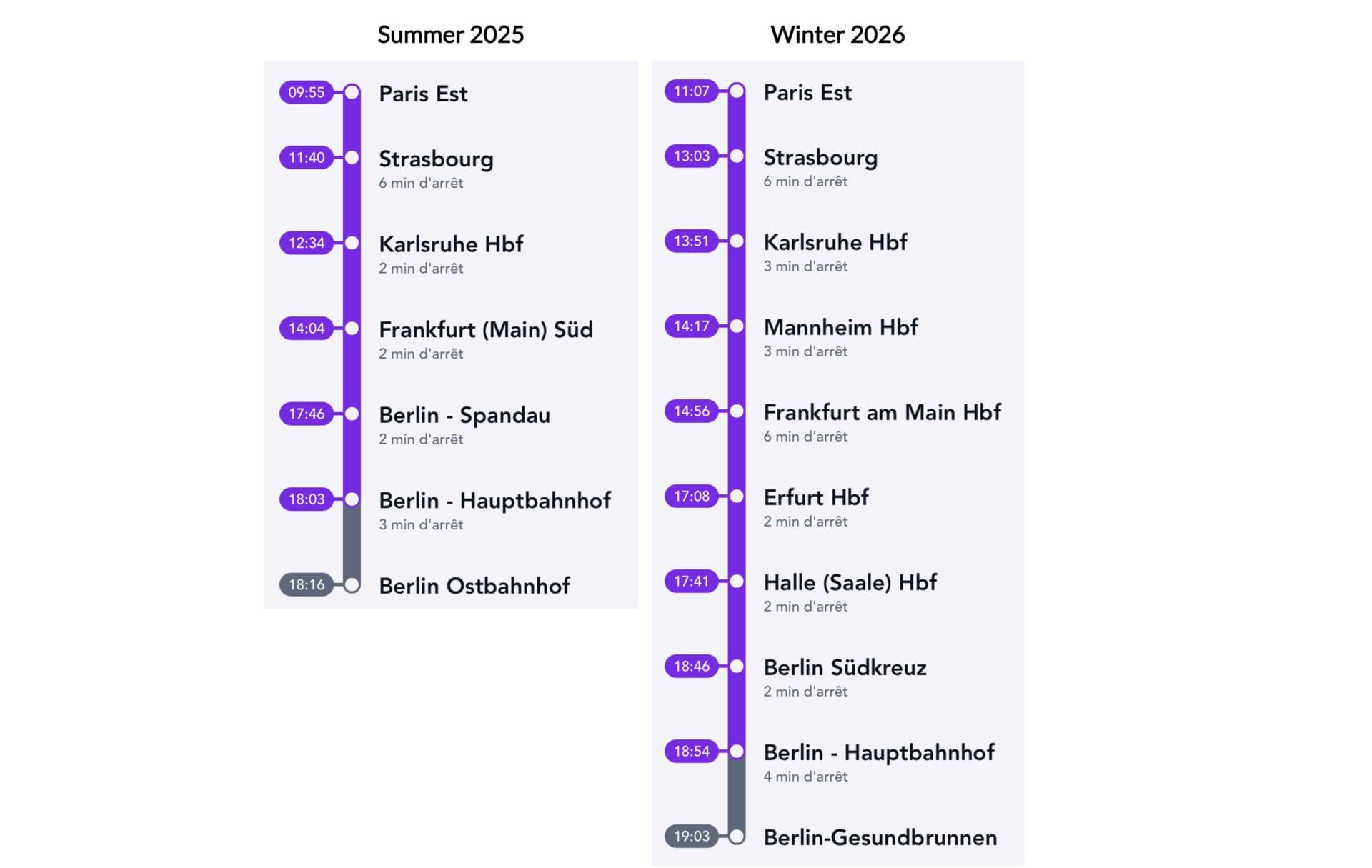
This leads me to believe that the Paris–Berlin is actually a German domestic train extended to Paris: the primary target, therefore, does not seem to be the traveler completing the entire journey.
What to Think of the ICE 3, Class 407?
The highlight of the ICE is the presence of a dining car and at-seat service in First Class.
Its weak point is the comfort of the seats, which I found mediocre, and the somewhat austere cabin ambiance, which is noticeable on a long journey.
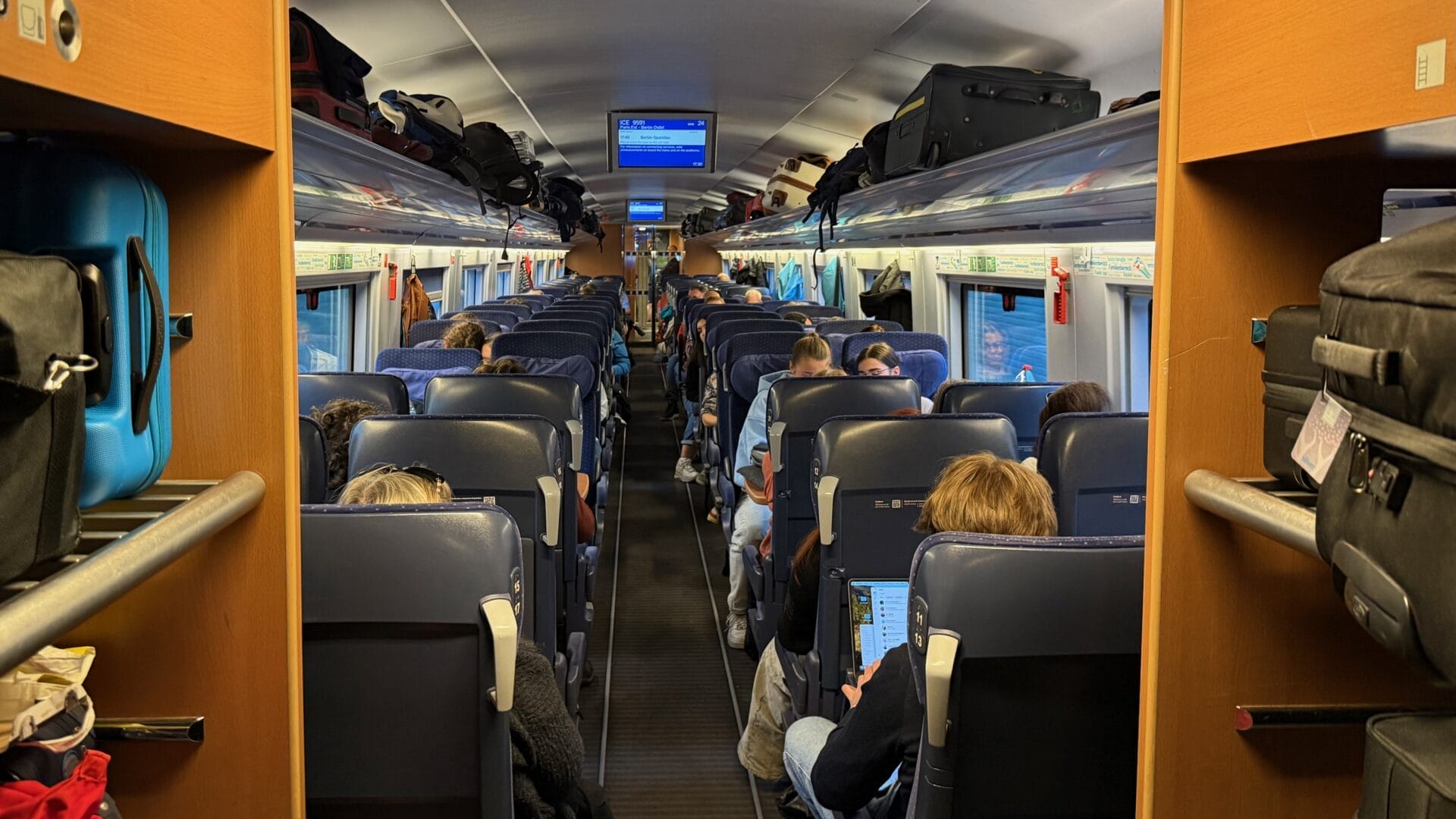
Paradoxically, the Second Class seat is almost more comfortable. However, the journey is not as pleasant due to greater proximity and the difficulty of finding space for luggage.
How to Book the Paris - Berlin - Paris Train?
It is possible to book either on the SNCF.connect website or the DB website.
My advice is to check both websites because each company applies its own rules. For example, advantage card discounts are only offered on SNCF.connect.
How to Make the Train Truly Competitive for Paris - Berlin - Paris?
Today, airlines operate between 11 and 13 daily flights, with aircraft seating 100 to 200 passengers each (Air France: six flights, Transavia: two, EasyJet: three to five).
The quality of the service remains unmatched for now. This high frequency makes it possible to find attractive fares, especially on less popular days and times.
Given this high quality of air service, adjustments seem necessary to make the Paris - Berlin - Paris rail offering more competitive.
Try to Shorten the Travel Time as much as Possible
I think we should really study how to reduce the travel time to a maximum of seven hours.
Perhaps this would be possible by taking the route via Brussels and Cologne? Indeed, today, Eurostar operates Paris - Brussels - Cologne in 3 hours 20 minutes, and DB operates Cologne - Berlin in 4 hours.
In any case, it would be worth considering.
Move to a Twice-Daily Frequency
To meet customer expectations, it seems to me that SNCF and DB should offer a minimum of two daily frequencies, with one departure early in the morning, around 6:00 AM, and another in the early afternoon, around 2:00 PM, in each direction.
This schedule would give travelers a choice and, most importantly, would ensure that the journey doesn't feel like it takes up the entire day.
Maintain a Night Train for a Complete Rail Offering
Finally, as I demonstrate in my second article, for such a distance, the night train remains essential to ensure the competitiveness of rail travel.
With such a wide range of three daily frequencies, the train would truly become competitive with air travel. Either the railway sector decides to invest the necessary resources, or it seems a bit illusory to hope that the public will choose to take the train.
Decouple the Strasbourg–Berlin Service from Paris
I find it hard to understand why it's not possible to establish a Strasbourg–Berlin ICE service, with stops in Germany, independent of the Paris service.
Given Strasbourg's proximity to Germany, this seems economically viable to me. It would simply involve adding or replacing a German domestic ICE with an additional destination 10 km from the border.
Still Improvable, Paris - Berlin by Day Train is not a Utopia!
The good news is that it wouldn't take much for traveling by train from Paris to Berlin to be a real alternative to flying.
The Remarkable Berlin Hauptbahnhof
Berlin's central station, the Hauptbahnhof in German, is worth a visit even if you're not catching a train. That's why I wanted to share it with you.
It's a station of superlatives: an average of 1,300 trains and 300,000 passengers pass through it daily. It's one of Europe's largest.
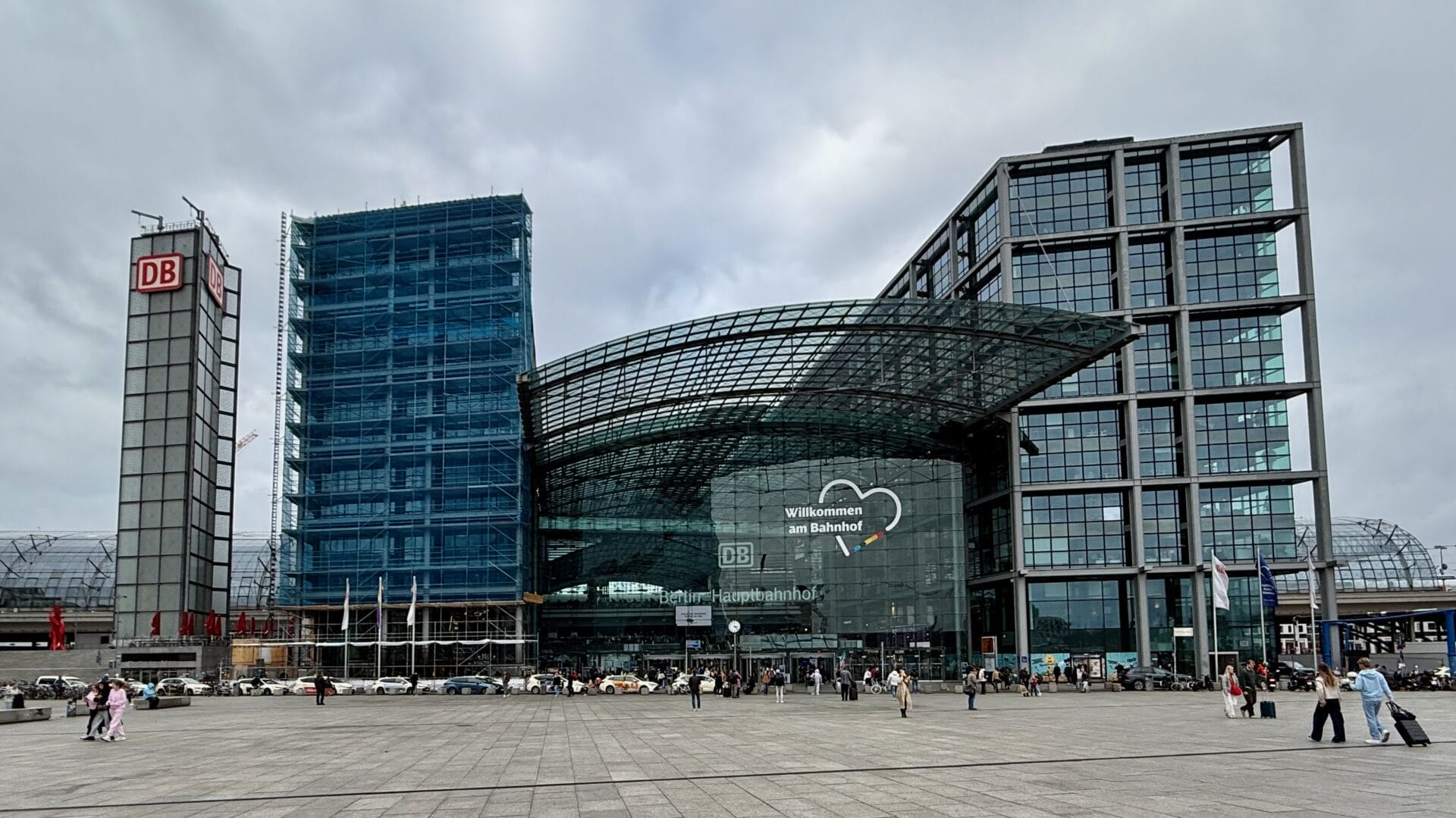
It was inaugurated in 2006 by Angela Merkel as a symbol of German reunification, located just a ten-minute walk from the Reichstag.
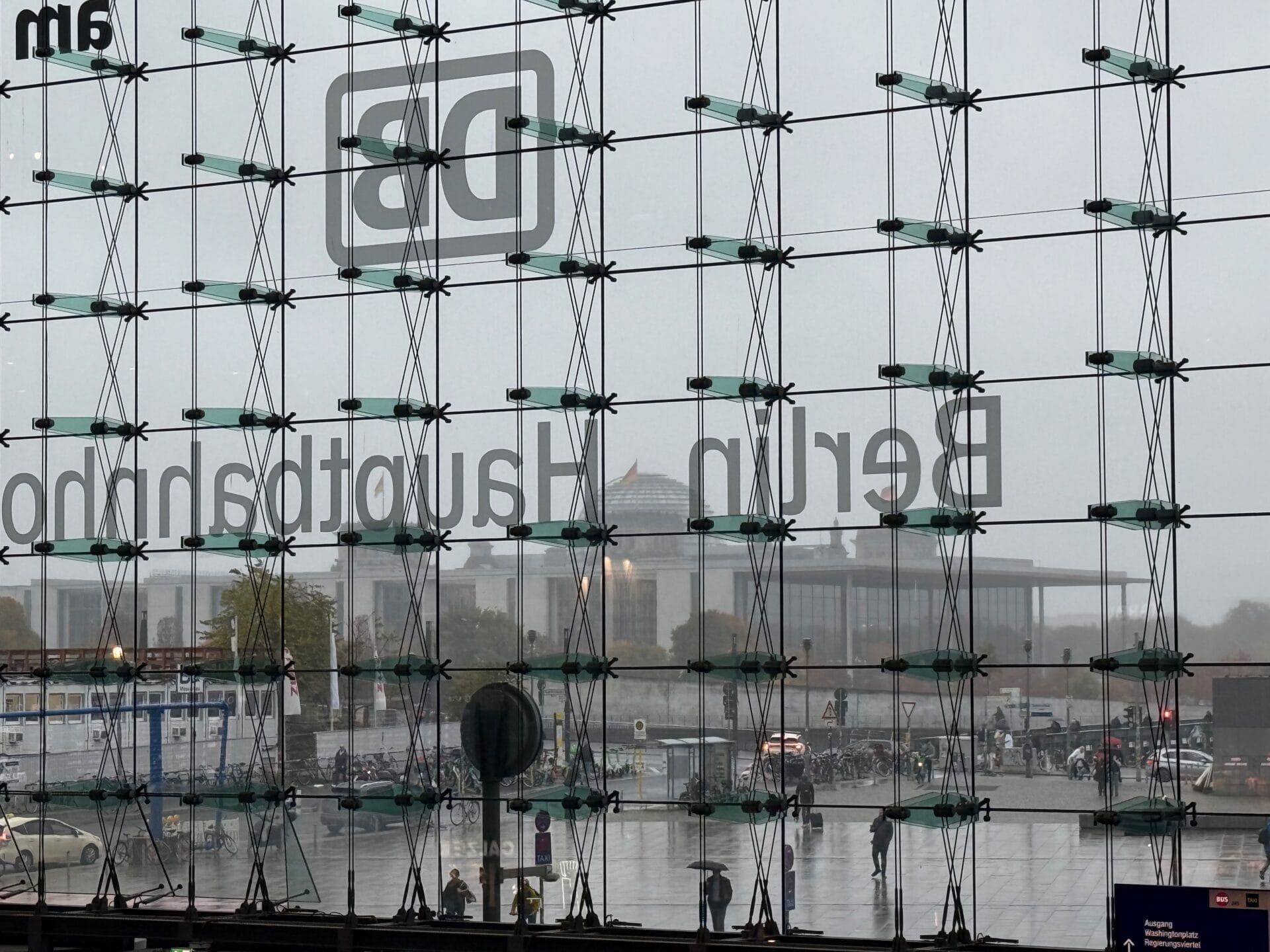
A Multi-Dimensional Station
What surprised me was the station's vertical and cross-shaped layout.
On the upper level, trains run east-west beneath a massive glass roof.
Below that are several floors with shops, fast-food restaurants, and external access for pedestrians, cars, buses, and taxis.
Finally, the north-south train lines run through the basement. There's no rail connection between the two axes. It's almost like having two stations in one location!

The integration of ICE, Intercity trains, and local transport—buses, S-Bahn, U-Bahn, tram—is remarkable.
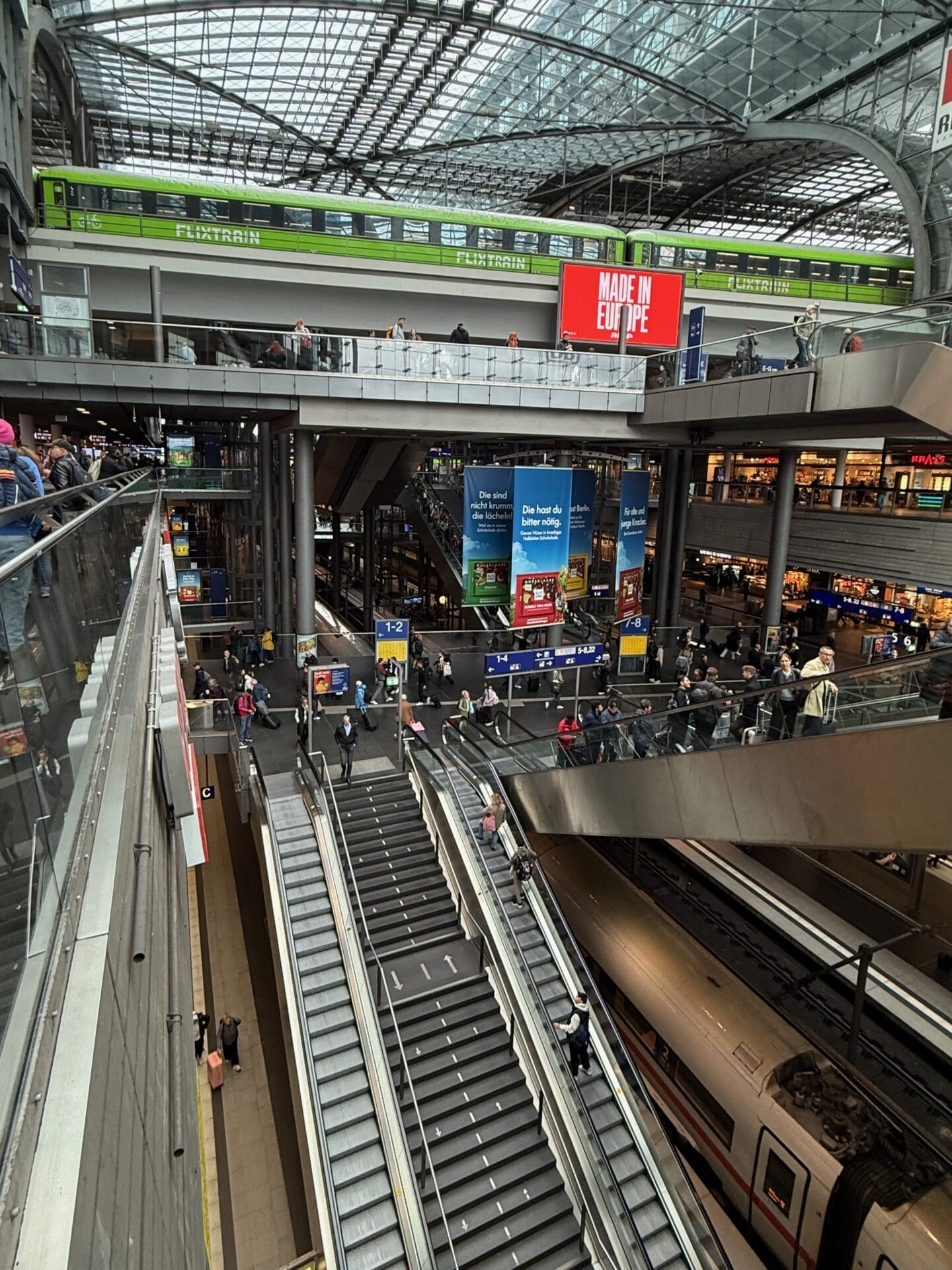
The low-angle views are spectacular, and the rail traffic is incessant.
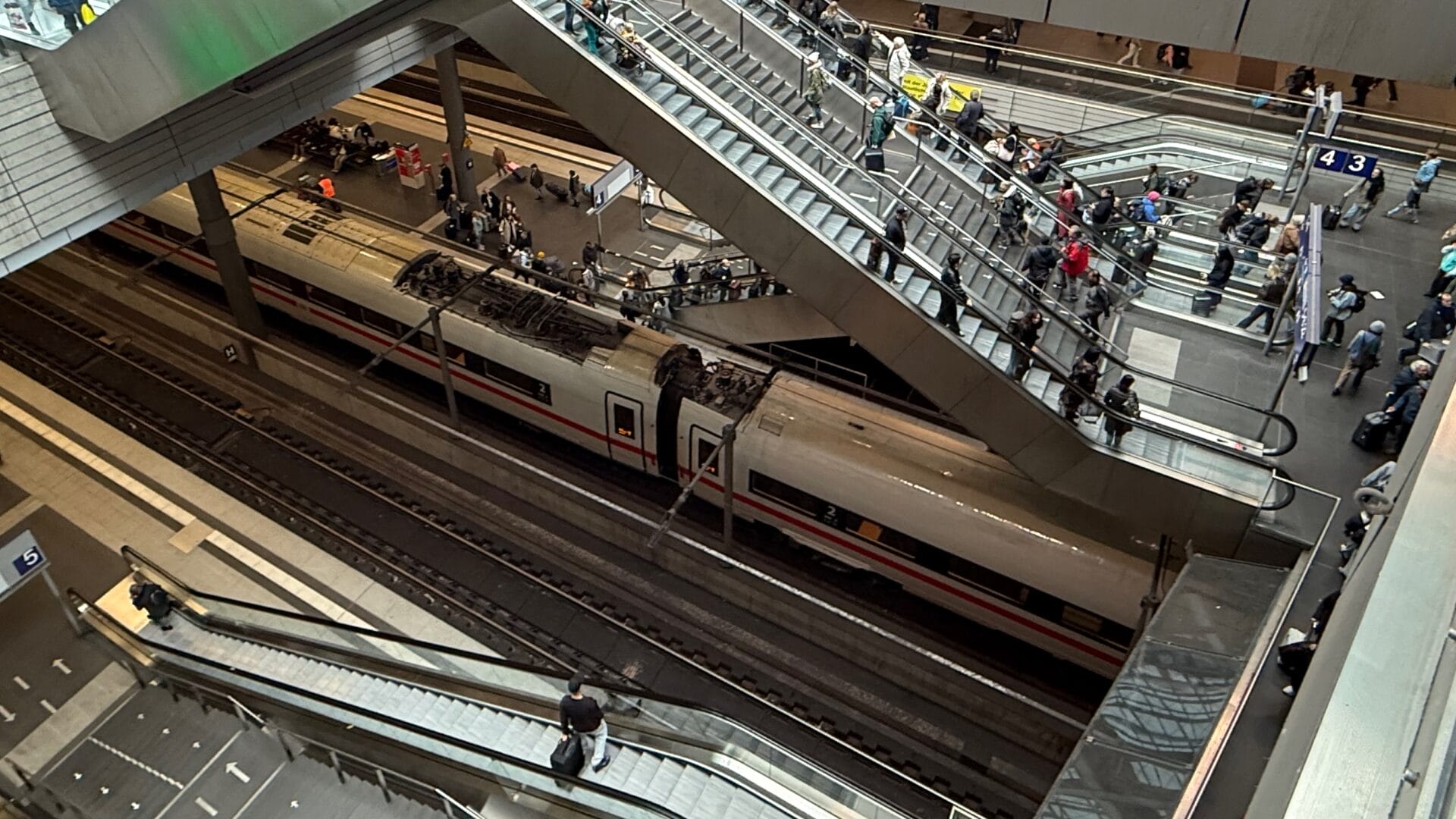
A Bustling Hub
Unlike the terminal stations in Paris, Berlin Hauptbahnhof is a through station, with trains continuously passing through, stopping only briefly to allow passengers to alight and board.
I enjoy watching the constant flow of trains and travelers, which I find fascinating.
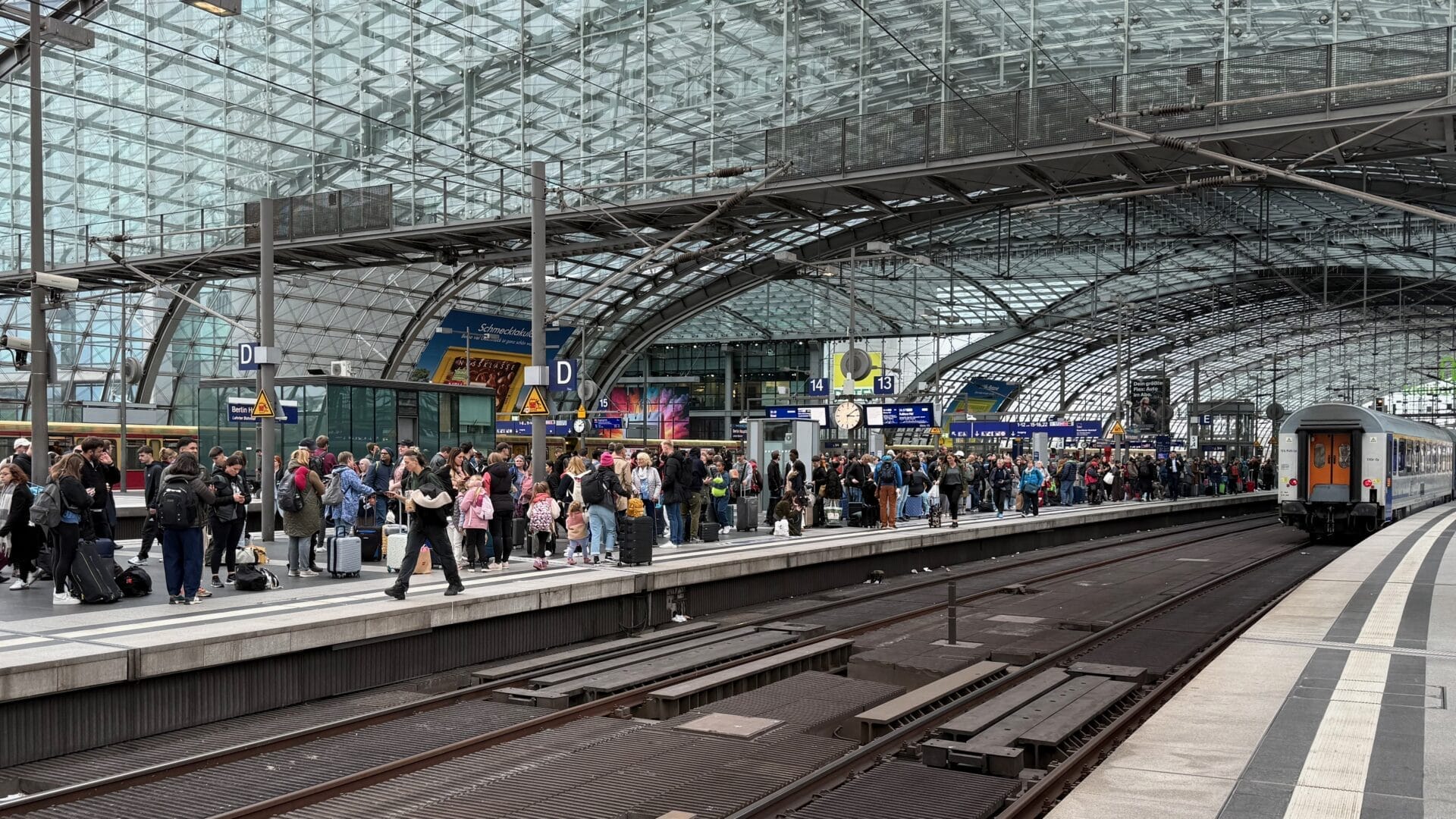
A Rail System with No Room for Error
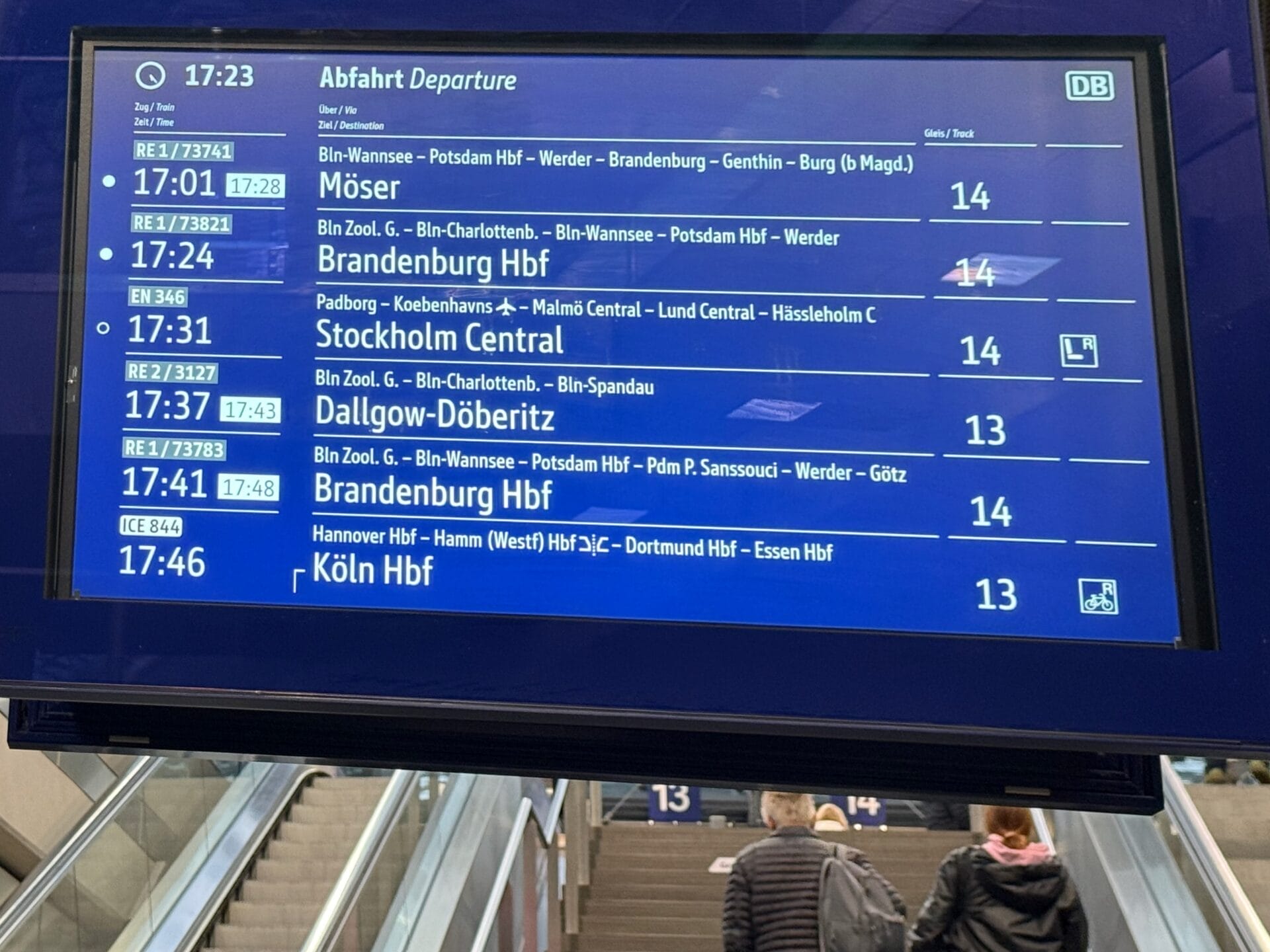
A look at the timetables reveals just how dense the traffic is. For instance, on this example at platform 14, trains are scheduled for 5:24 PM, 5:28 PM (delayed), 5:31 PM (the famous Berlin–Stockholm night train that I took from Hamburg and highly recommend), and 5:48 PM (also delayed).
It's clear that the slightest operational hiccup leads to a chain reaction. This is the reality of German rail traffic in 2025.
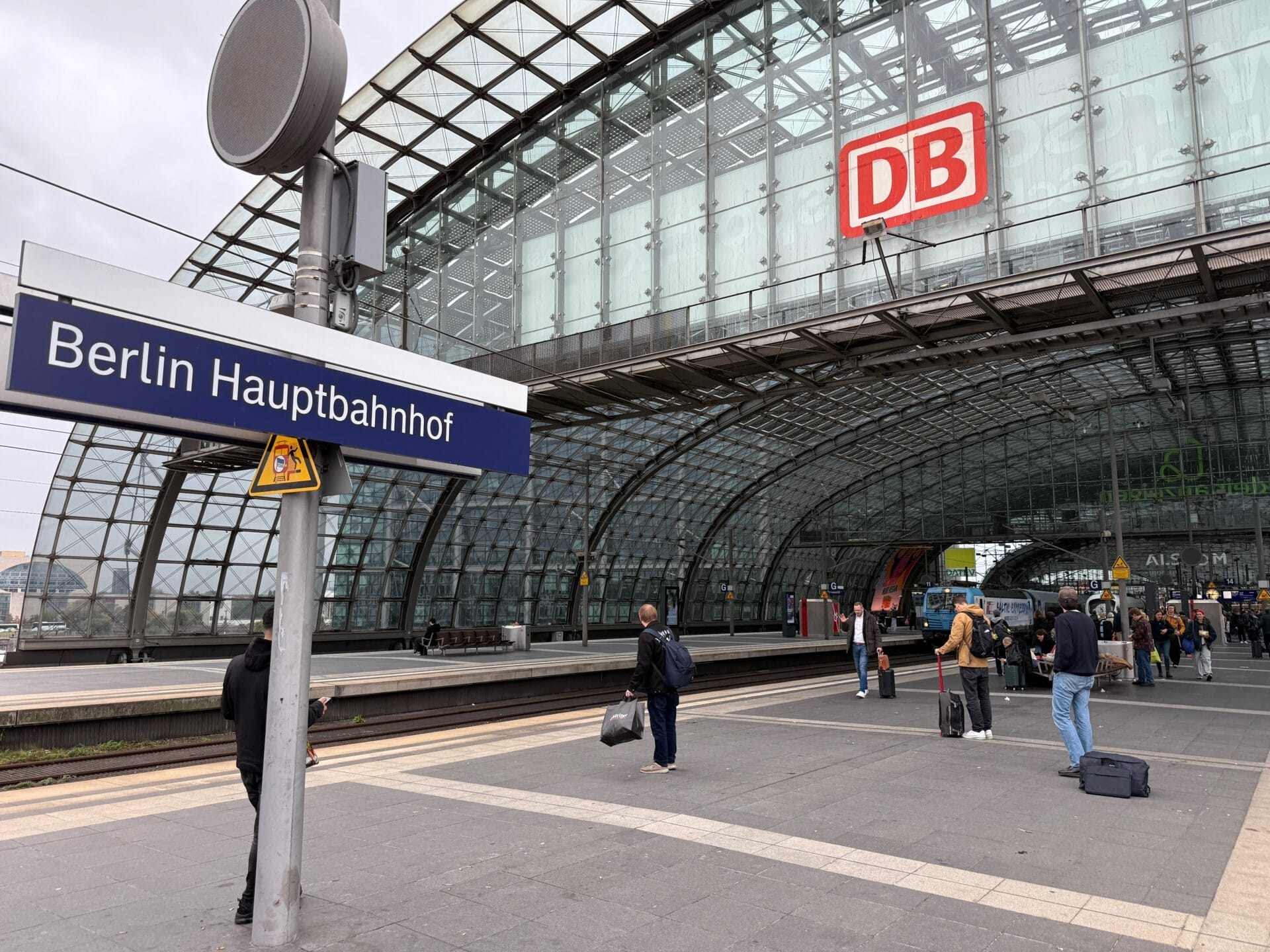
Berlin Hauptbahnhof: a Tourist Attraction
So, even if you're not catching a train, next time you visit Berlin, make sure to explore Berlin Hauptbahnhof.
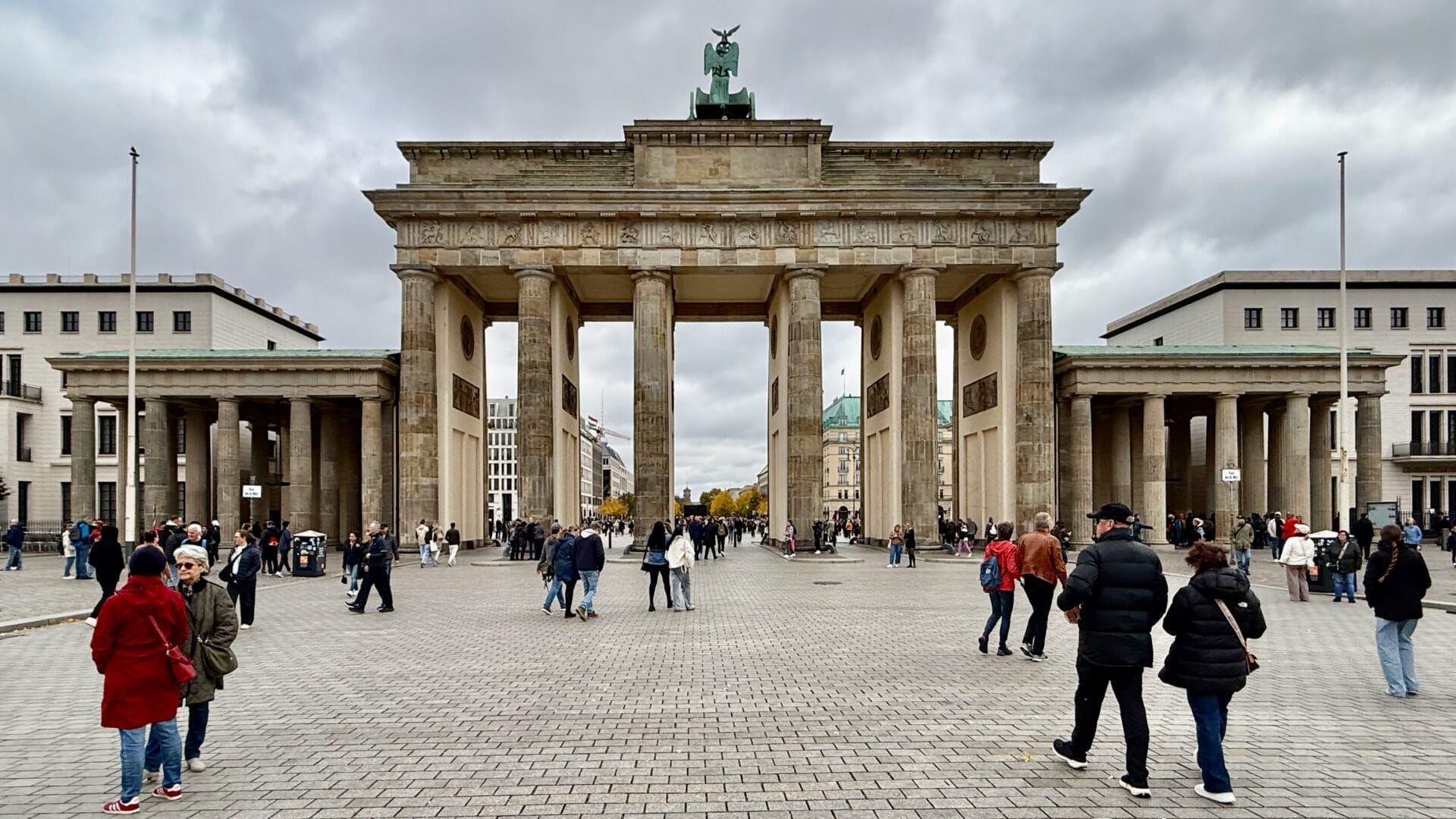
Five Days to Discover Berlin
I had visited Berlin before, in 1990, just after the fall of the Wall, and again in 2006, each time for a weekend.
This time, I decided to take my time and stay for five full days, and I absolutely loved it.
The city is historically and culturally fascinating, boasting numerous museums. Berlin life is rich and vibrant. I wasn't bored at all, and this will soon be the subject of a dedicated article.
0 Comments