
Train Travel in China: Complete Guide (Experience, Tips, Model)
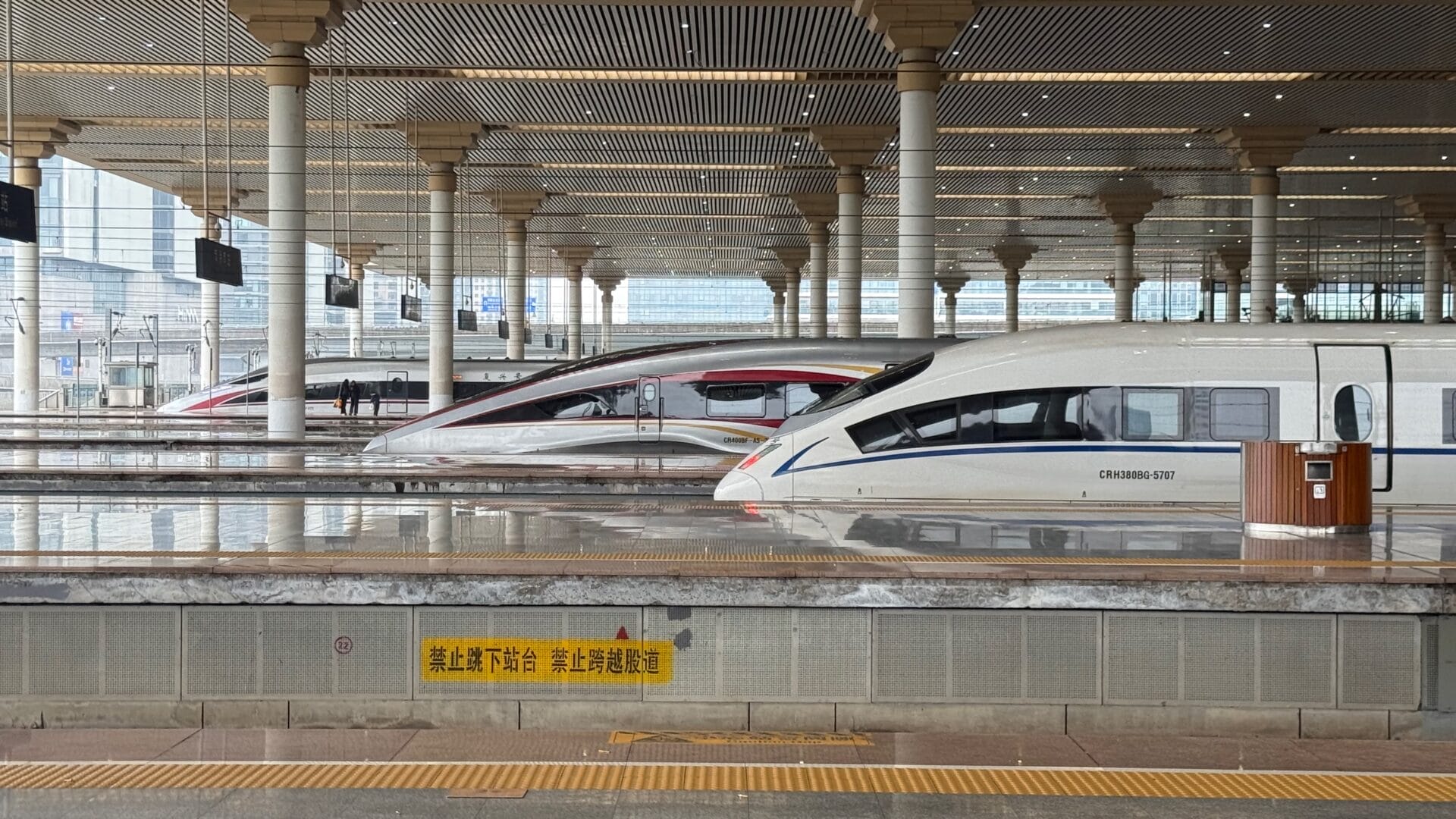
A comprehensive guide to understanding China's railway revolution
With over 45,000 km of high-speed lines, China now has the most extensive railway network ever built.
But behind these impressive figures, what is the travel experience actually like?
And more importantly, how did one country manage, in less than twenty years, to become the world leader in high-speed rail?
In March 2026, I traveled over 11,000 km by train across China—from Beijing to Hong Kong, via Shanghai, Harbin, Chongqing, and Guangzhou—combining high-speed trains, night trains, and conventional lines.
A former night train professional, then in air transport for over 35 years, I wanted to analyze this transformation both as a traveler and as an industry specialist.
This guide brings together four complementary articles to provide an in-depth understanding of China's railway model, from on-the-ground experience to its industrial logic.
Four Articles to Know Everything About Train Travel in China in 2026
1. Traveling by High-Speed Train in China: My Assessment After 11,000 km
A detailed account of the Chinese high-speed train experience:
station organization, onboard comfort, different classes—including Business class inspired by aviation—and comparison with European standards.
👉 This article is the ideal starting point for understanding the passenger experience.
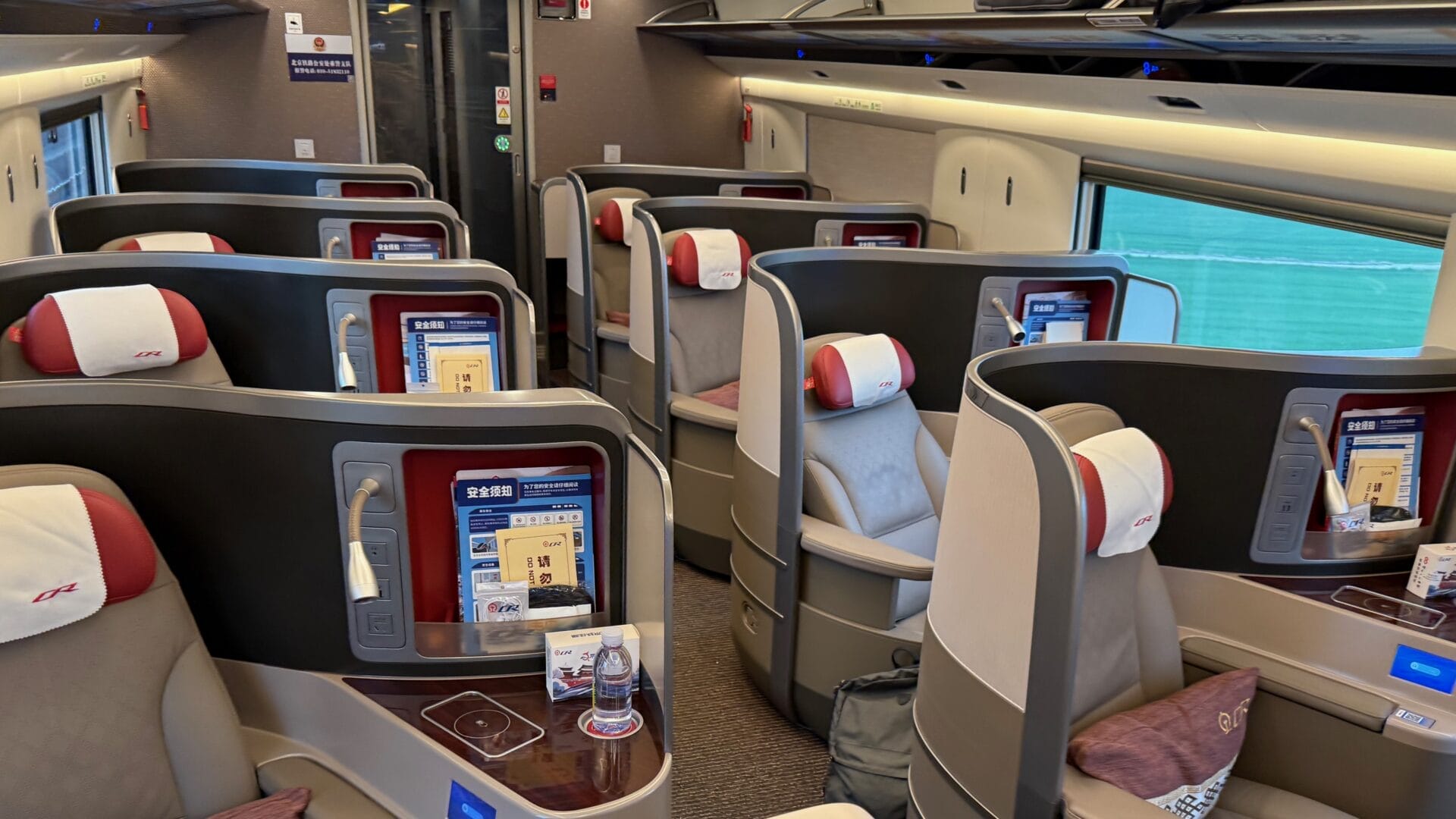
2. Night Trains in China: Between Tradition and Innovation
From conventional trains inherited from the Maoist era to high-speed night trains, including innovative concepts like capsule sleepers, China is exploring several models.
👉 An article focused on the night train passenger experience.
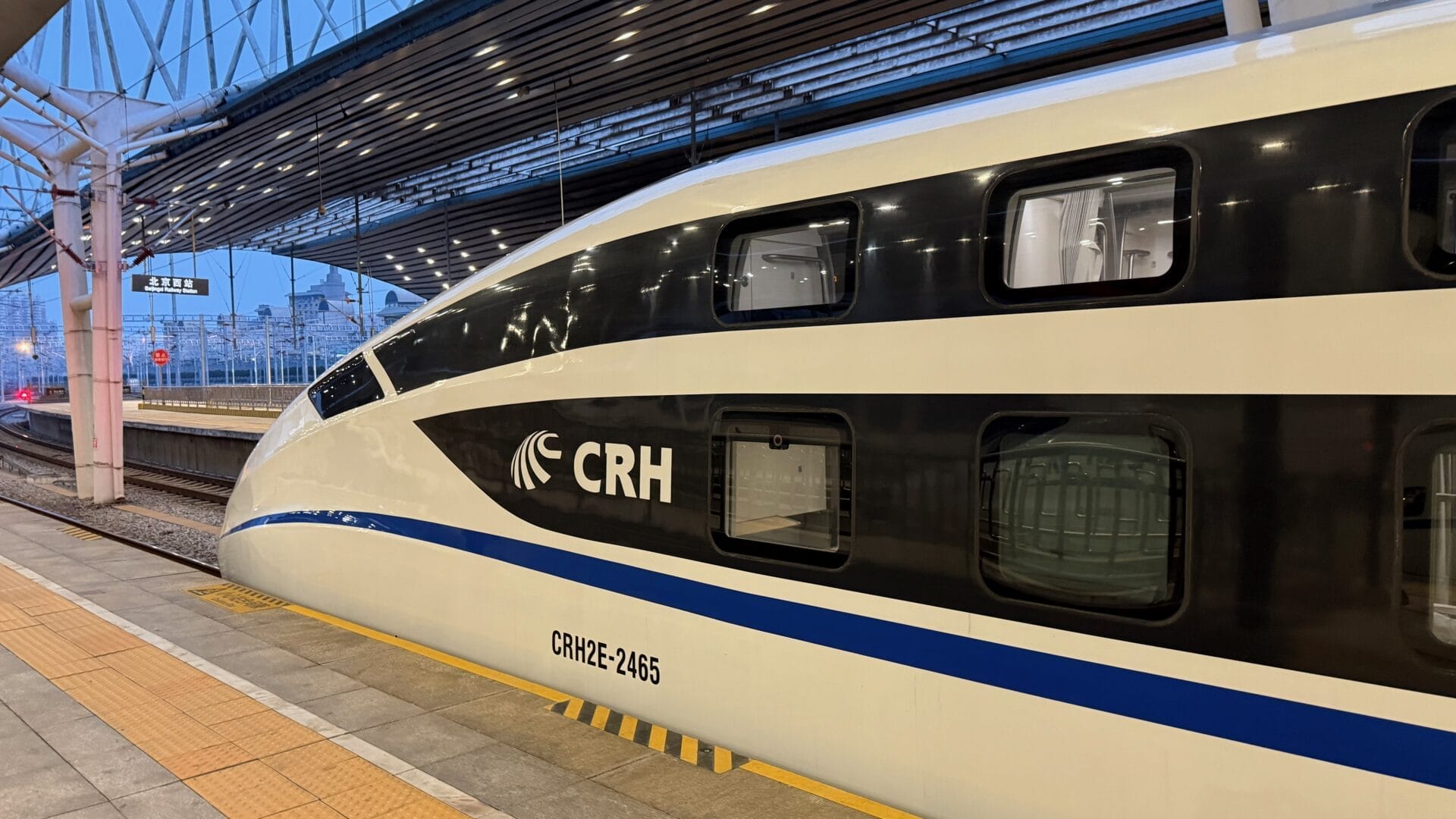
3. My Practical Tips for Taking the Train in China
Booking tickets, understanding classes, passing station controls, paying on-site: traveling by train in China requires some guidance.
👉 A complete guide to traveling efficiently from your very first journey.
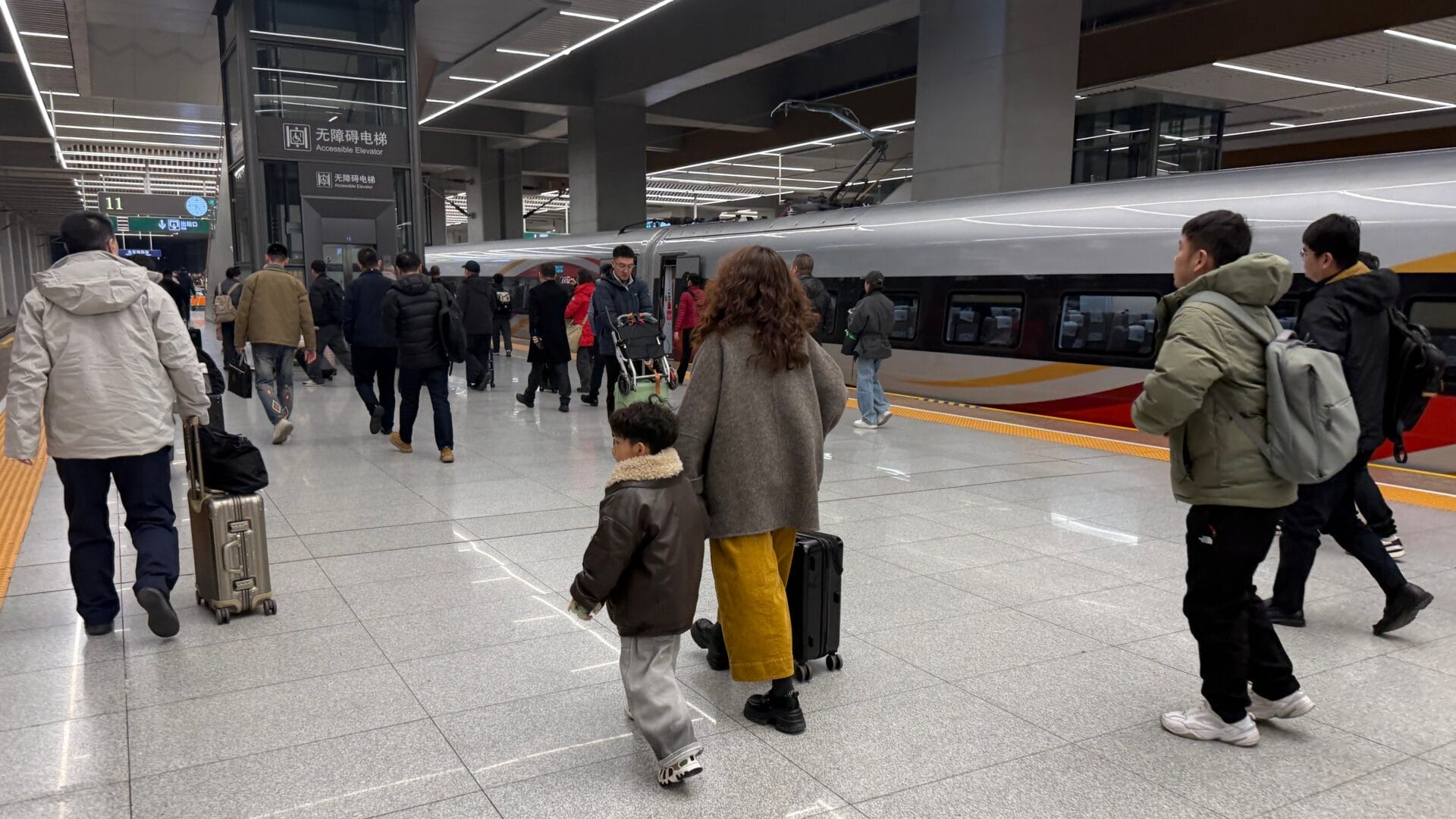
4. Why China Dominates Global High-Speed Rail
How did China go from a saturated network to an ultra-efficient system in less than twenty years?
Technology transfer, centralized planning, massive industrialization: this article analyzes the keys to success—and its limitations.
👉 A reading focused on strategy and industrial model.
Who Are These Articles For?
They are aimed at three types of readers:
- Travelers planning a trip to China
- Train enthusiasts and transport aficionados
- Professionals or policymakers interested in mobility transformations
Beyond a simple travel narrative, it offers a three-level reading:
field experience + practical tips + model analysis.
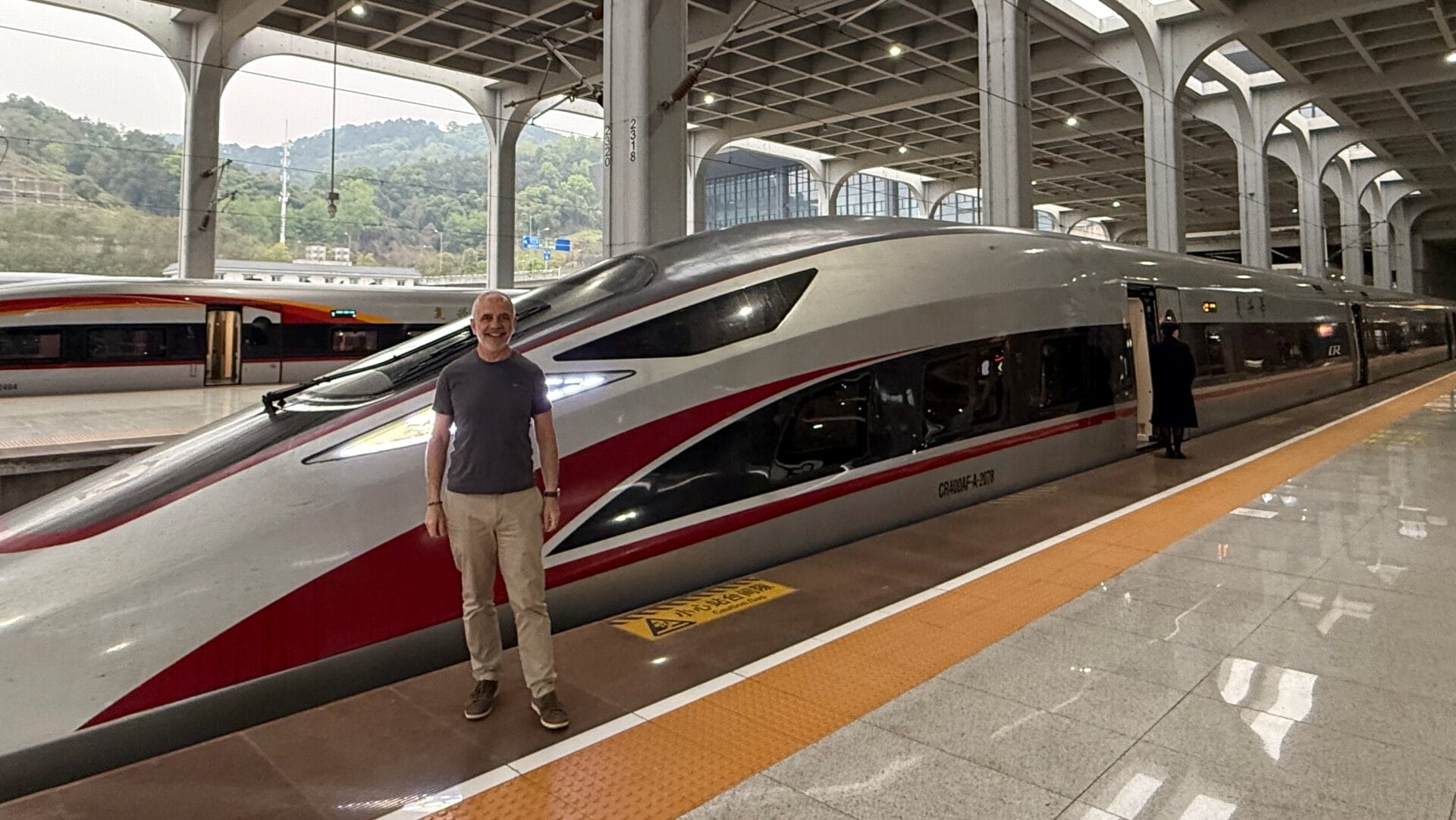
Finally, my articles are illustrated with numerous photos I took during my trip, which will help you visualize what train travel in China looks like in 2026.

Behind the Scenes of My Discovery of Chinese Trains
Preparing such a journey required significant advance work:
- Understanding a railway system very different from Europe's
- Identifying trains representative of different generations
- Building a coherent itinerary within a limited timeframe
The Journey I Made in March 2026
My route was primarily dictated by the trains I wanted to experience:
- Day and night high-speed trains,
- Train models from different generations, including a conventional train.
I always purchased tickets in the most comfortable classes: Deluxe Soft Sleeper on night trains and Business Class on day trains.
I also spent long periods in the other classes to properly assess their comfort.
I began my journey in Shenzhen with a very innovative train featuring capsule sleepers.
Then I took, at 350 km/h, the country's first high-speed line between Beijing and Nanjing to reach Hangzhou. I went to Shanghai on one of the oldest high-speed trains.
Next, in 24 hours, I traveled to the far north of the country to Harbin on a conventional train.
I continued my journey with high-speed trains from Harbin to Chongqing with a connection in Beijing. It's as if I had traveled from Madrid to Stockholm via Paris in just one afternoon and one night!
After Chongqing, I finished my trip with day high-speed trains to Guangzhou and Hong Kong.

Equivalent Distances in Europe, but Unserved
We sometimes forget that China is the size of Europe. The distances are considerable. With the journeys I made in China, I had fun finding equivalent routes in Europe. This helps better visualize the scale of the country.
My first journey from Shenzhen to Beijing by overnight high-speed train is comparable to a Casablanca–Paris, which I covered in 12h 8min over a distance of 2,200 km.
My Fuxing journey from Beijing to Hangzhou is equivalent to a Paris–Rome covered in just 4h 31min.
Going from Harbin, in the far north, to Beijing, 1,300 km away in 4h 41min, is like doing a Copenhagen–Paris!
When I took a conventional train from Shanghai to Harbin, I covered 2,400 km in 24 hours. In Europe, that's equivalent to doing a Paris–Kyiv.
0 Comments